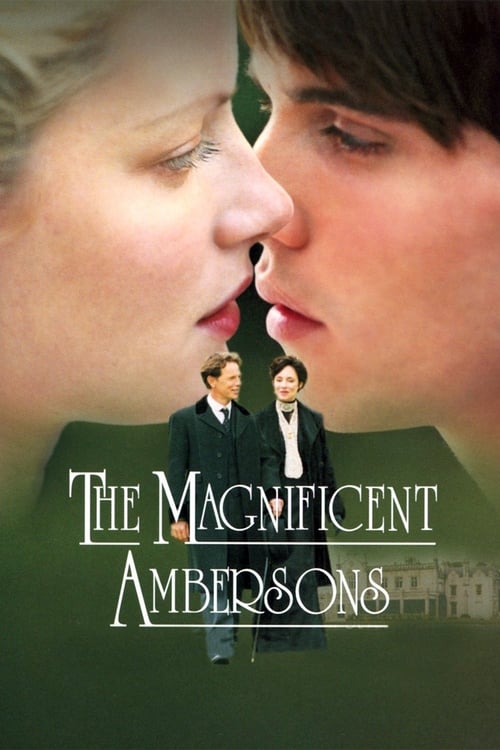
The Magnificent Ambersons
2002
No user ratings available yet
Diversity score: 3.6 out of 10

2004
Director
Jean-Daniel Verhaeghe
Runtime
111 minutes
Average Rating
No ratings yetSynopsis
A poor but ambitious young man arrives in Paris and settles down in the boarding house run by Madame Vauquer. He soon gets to know the guests: Victorine Taillefer, a young lady her rich father refuses to recognize; Horace Bianchon, a medical student; Monsieur Vautrin, a mysterious and disconcerting man; Goriot, a rich merchant who spent all his fortune for his daughters, Delphine and Anastasie, to make a rich marriage. Eugène becomes friends with Goriot but while the former, thanks to his cousin Madame de Beauséant, is introduced in high society, Goriot, both exploited and scoffed at by his daughters, continues his descent into hell.
Overall Score
Limited
Category Breakdown
LGBTQ+ Representation
The film adheres strictly to the heteronormative social structures of 19th-century France. There is no evidence of non-cisnormative gender identities or same-sex intimacy.
Gender Representation
The narrative explores women navigating a rigid patriarchal framework where social capital is their primary currency. While characters show agency, the film reinforces traditional gendered power dynamics.
Racial & Ethnic Diversity
Casting reflects the historical demographic constraints of 19th-century Paris. The story focuses on the white, Eurocentric social strata of the French bourgeoisie and working class.
Religious & Cultural Diversity
The film offers a sophisticated critique of capitalist values and the erosion of empathy. It deconstructs the traditional family unit, portraying it as a site of exploitation.
Disability Representation
There is no significant focus on neurodivergence, physical disability, or mental health. Character struggles are primarily socioeconomic and moral rather than centered on disability agency.
Strengths
Areas for Improvement
AI Analysis
Jean-Daniel Verhaeghe’s adaptation of Balzac’s work functions as a structural critique of 19th-century class hierarchies. It prioritizes period accuracy and the moral implications of mercantilism over modern identity-driven narratives. The film lacks demographic breadth, scoring low in LGBTQ+, racial, and disability representation. It remains rooted in the Eurocentric, heteronormative realities of its historical setting. However, it finds strength in its cultural critique. By portraying the pursuit of wealth as a corrosive force that destabilizes the family, the film provides a deep study of systemic socioeconomic oppression.
2002

1990

1996

2020

2022

2007
1994

2005

2021
No reviews yet. Be the first to share your thoughts on this movie!
Use the rating form above to leave a star rating and optional review.