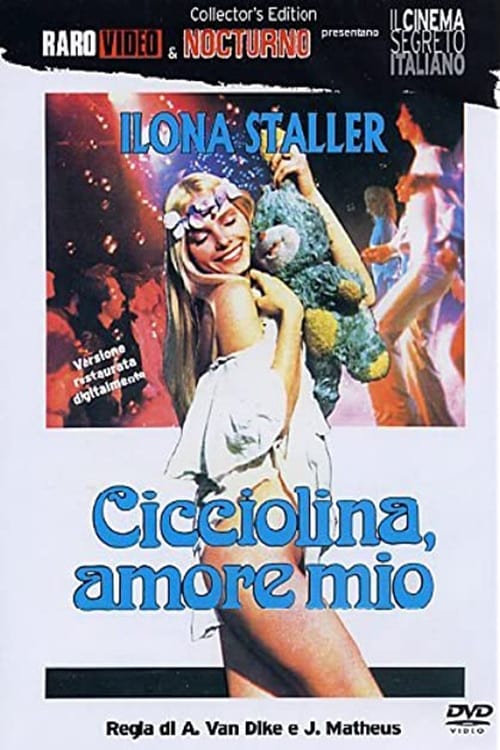
Cicciolina amore mio
1979
No user ratings available yet
Diversity score: 5.6 out of 10

1978
UnratedDirector
Fernando Di Leo
Runtime
94 minutes
Average Rating
No ratings yetSynopsis
Lia and Tina are two beautiful girls who meet and realize that they have a lot in common. They are both young, beautiful and pissed off, so they decide to hitchhike their way to Rome to find Nazariota's commune, a place to stay for free and have all the sex they want... or so they think. Things don't go as they have planned though, and soon they become involved in prostitution, the police and an aggressive gang.
Overall Score
Fair
Category Breakdown
LGBTQ+ Representation
The film centers on the bond between Lia and Tina, highlighting their shared disillusionment. While they pursue hedonistic freedom together, there is no explicit evidence of queer identities or romantic orientations.
Gender Representation
Lia and Tina act as high-agency protagonists who drive the plot forward. Their pursuit of autonomy challenges conventional 1970s depictions of submissive femininity.
Racial & Ethnic Diversity
The production reflects the demographic realities of 1978 Italy. The narrative appears focused on local social strata rather than intersectional racial blending.
Religious & Cultural Diversity
The story engages with anti-establishment themes through the protagonists' search for a commune. It critiques institutional stability by depicting friction with the police and traditional social orders.
Disability Representation
There is no evidence regarding the inclusion or portrayal of characters with physical or neurodivergent disabilities.
Strengths
Areas for Improvement
AI Analysis
To Be Twenty subverts traditional gender roles by placing two women at the center of the narrative. Lia and Tina are active participants in their own lives, navigating high-risk environments like prostitution and gang conflict with significant agency. However, the film lacks intersectional depth. The focus remains on local Italian social dynamics, offering little evidence of racial diversity or explicit LGBTQ+ identities. The narrative leans heavily into anti-establishment themes and communal living rather than diverse identity politics. Ultimately, the film is a study of female autonomy and social rebellion, though it remains limited by the demographic and social perspectives of its era.
1979

1982

2002

1967

1977

1974
1970

1974

2001

1975

1975
1976
No reviews yet. Be the first to share your thoughts on this movie!
Use the rating form above to leave a star rating and optional review.