How to Stop a Motor Car
1902
No user ratings available yet
Representation score: 0.3 out of 10
Representation Score
Minimal
1900
Not RatedDirector
Cecil M. Hepworth
Runtime
1 minutes
Average Rating
No ratings yetNew Showbiz Analysis
This early silent film serves as a technical artifact of cinematic history rather than a vehicle for social representation. Its focus is entirely on the mechanics of a comedic accident involving a vehicle and a horse-drawn carriage. Because the film is a brief 'trick film' centered on a physical gag, it lacks the narrative depth required to explore identity. The subjects and setting reflect the homogeneous social landscape of the era. Ultimately, the work offers negligible diversity from a contemporary perspective, prioritizing visual experimentation over progressive storytelling or challenging social hierarchies.
Category Breakdown
The film is a brief silent trick film focused on a physical gag. It contains no indication of non-straight relationships or same-sex interactions.
The film lacks meaningful gendered character arcs. It adheres to male-centric slapstick humor and provides no evidence of women taking leading roles.
The film does not feature a diverse cast or any visible exploration of racial identity. The subjects reflect a homogeneous social landscape.
The narrative functions within a traditional slapstick framework. It lacks engagement with religious, political, or secular themes.
There are no depictions of neurodivergence or physical disabilities. The comedy relies on a near-collision spectacle rather than lived experiences of disability.
Present on Screen
Limited or Absent
Official Synopsis
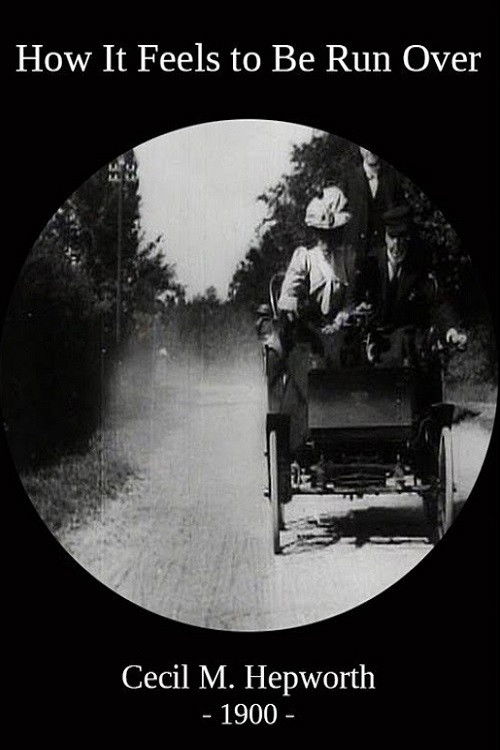
As the camera looks down an open road, a horse and carriage approaches, and passes by to one side of the field of view. Soon afterwards, an automobile comes up the road, straight towards the camera. As it gets nearer, the occupants start to wave frantically, but can a collision be avoided?
1902
1928
1897
1920
1896
1896
1909
1907
No reviews yet. Be the first to share your thoughts on this movie!
Use the rating form above to leave a star rating and optional review.