
Wallander 09 - The Container Lorry
2006
No user ratings available yet
Diversity score: 4.8 out of 10
2010
TV-MADirector
Mikael Marcimain
Runtime
97 minutes
Average Rating
No ratings yetSynopsis
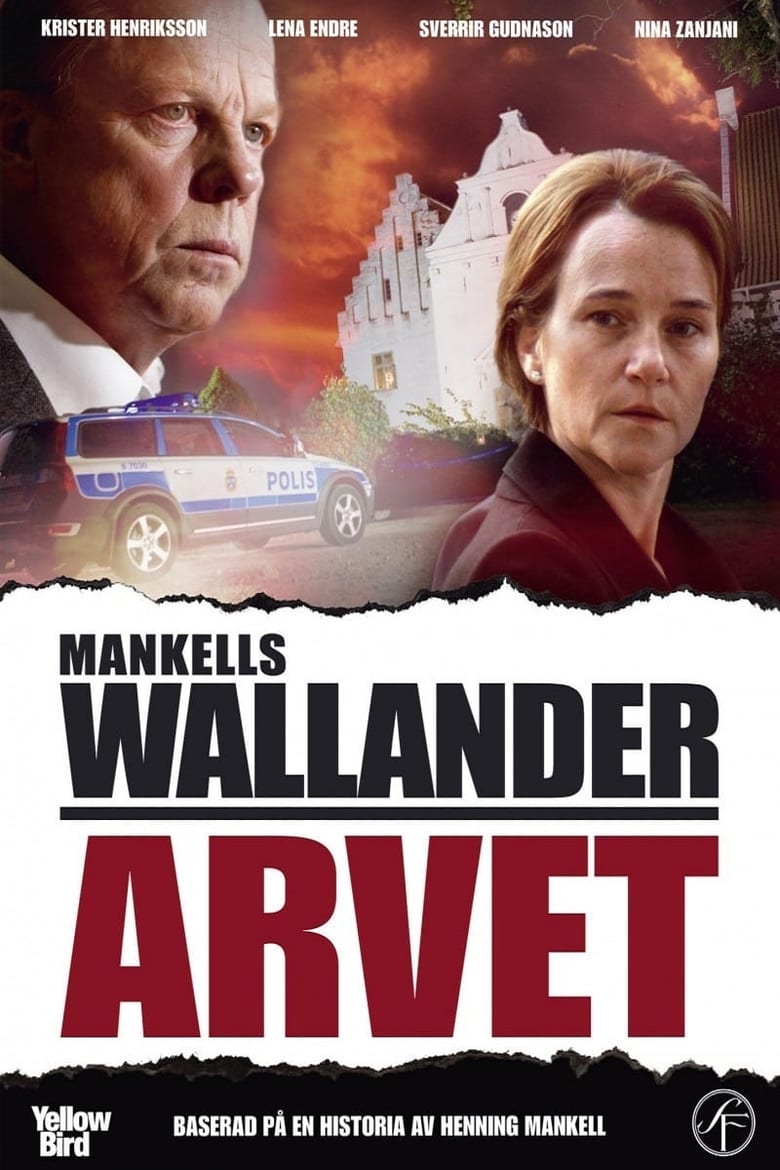
When Manfred Stjarne is stabbed to death outside the Brada cider factory his wife Claire has inherited - suspicion falls on Polish worker Jan Kowalski, with whose wife Manfred was having an affair, but Jan is found hanged - later evidence suggesting foul play. Benjamin Wilkes, an ex-psychologist who helped Manfred select redundancy candidates, is killed in the same way as Manfred, putting disgruntled ex-Brada employees in the frame, but a third slaying implicates a former patient of Wilkes, who has connections to the Stjarne family. A newly loved-up Isabelle and Pontius start to fool around whilst on surveillance, taking their eye off the ball and allowing this suspect to confront Claire.
Overall Score
Fair
Category Breakdown
LGBTQ+ Representation
The story centers on heteronormative romantic tropes, specifically marital infidelity and the relationship between Isabelle and Pontius. No queer-coded subtext or non-cisnormative identities are present.
Gender Representation
Claire Stjarne occupies a central role as an inheritor of power rather than a passive victim. Isabelle provides a professional presence in the investigative process, though male-driven violence remains a core conflict.
Racial & Ethnic Diversity
The inclusion of Jan Kowalski, a Polish worker, introduces ethnic dimensions to the plot. This subplot uses migrant labor to examine how systemic biases and nationality influence perceptions of guilt.
Religious & Cultural Diversity
The narrative explores the friction between the working class and the managerial elite through the lens of a cider factory. It critiques capitalist structures and the instability of industrial institutions.
Disability Representation
There is no discernible focus on physical or neurodivergent disability. While an ex-psychologist is a character, mental health is not a central narrative driver.
Strengths
Areas for Improvement
AI Analysis
Wallander: The Heritage functions as a social thriller that uses a crime framework to examine class struggle and economic displacement. It moves beyond simple genre tropes by integrating themes of migrant labor and corporate inheritance. While the film succeeds in providing social commentary regarding the friction between workers and the elite, it remains tethered to traditional romantic structures. The narrative lacks significant LGBTQ+ representation and does not explicitly address disability. Ultimately, the film's strength lies in its intersectional tension regarding nationality and labor status, providing a more nuanced look at systemic bias than a standard procedural.
2006
2013
2005
2013
2006

2006

2005
2010

2022
2005

2005

2002
No reviews yet. Be the first to share your thoughts on this movie!
Use the rating form above to leave a star rating and optional review.