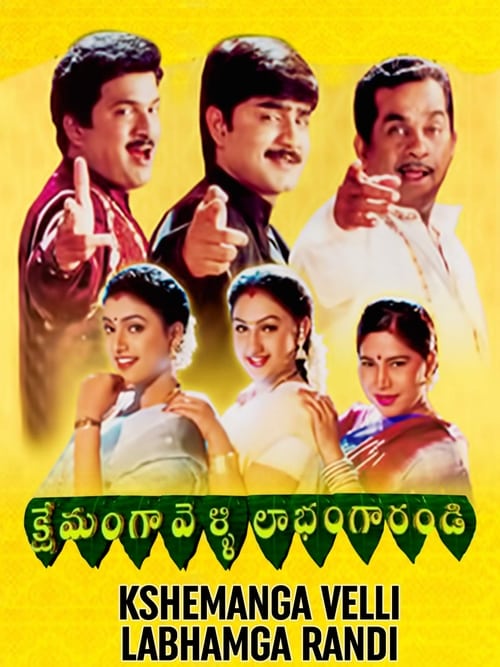
Kshemanga Velli Labhamga Randi
2000
No user ratings available yet
Diversity score: 2.7 out of 10

2001
Director
K Raghavendra Rao
Runtime
161 minutes
Average Rating
No ratings yetSynopsis
Jhoomri and her husband, Bhimsha, move into a new neighbourhood. Their immediate neighbours are three squabbling couples, namely Vijay and Anjali who are newly married; Appu Khote and Vimla, who are married and have 4 children; and Ravi and Meena, who are also married and have one child. With their wages unable to keep up with inflation and high cost of living, unable to pay even rent to the landlord, B.K. Kakkad, the wives decide to seek employment to augment their income, with hilarious results from their spouses, who will go to any extent to keep their wives at home, even if means to bring a dancing girl home to cook and look after the children!!
Overall Score
Limited
Category Breakdown
LGBTQ+ Representation
The film operates within a strictly heteronormative framework. It does not feature any LGBTQ+ characters or non-heteronormative identities.
Gender Representation
Women drive the central conflict by seeking employment to combat economic instability. However, the narrative often leans into traditional hierarchies as husbands resist their wives' professional agency.
Racial & Ethnic Diversity
The cast is culturally homogeneous and reflects a localized, authentic middle-class Indian socioeconomic life. It avoids globalized whitewashing by maintaining a grounded, culturally specific identity.
Religious & Cultural Diversity
The story reinforces traditional social structures and the sanctity of the nuclear family. It focuses on domestic management and household preservation rather than systemic critique.
Disability Representation
There is no discernible representation of physical, sensory, or neurodivergent disabilities within the primary cast or character arcs.
Strengths
Areas for Improvement
AI Analysis
Aamdani Atthanni Kharcha Rupaiya is a conventional domestic comedy that prioritizes established social and gendered hierarchies. While it provides a glimpse into the economic agency of women, the film's structure ultimately upholds traditional family norms and heteronormative expectations. The film succeeds in offering an authentic, culturally specific look at middle-class Indian life. It avoids the pitfalls of globalized media by remaining grounded in its local context, though it lacks engagement with intersectional identities. Ultimately, the narrative functions as a reflection of early-2000s domestic social values, focusing on the preservation of the household unit rather than subverting systemic power dynamics.
2000
2005

2007

1966
1998
1958

2010
1998
2005

2006

2003

2021
No reviews yet. Be the first to share your thoughts on this movie!
Use the rating form above to leave a star rating and optional review.