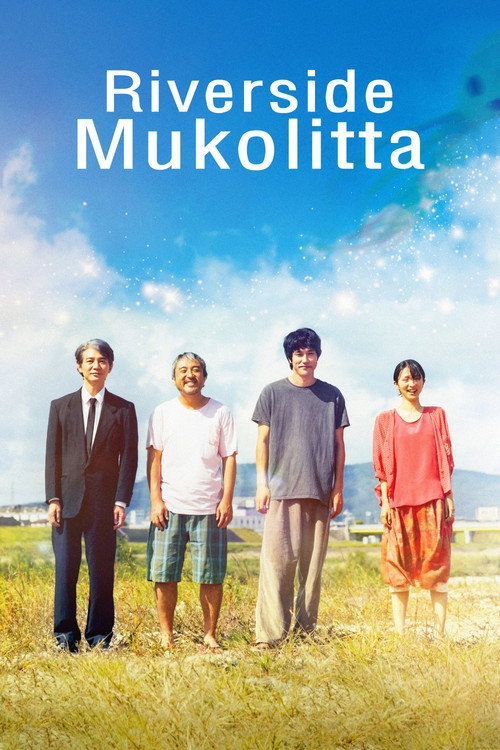
Riverside Mukolitta
2021
No user ratings available yet
Representation score: 7.9 out of 10

Representation Score
Limited
2012
Director
Seiji Izumi
Runtime
110 minutes
Average Rating
No ratings yetNew Showbiz Analysis
HOME (2012) is a conventional domestic drama that emphasizes traditional family dynamics and regional folklore. The story revolves around a Japanese family's transition to a rural village, using supernatural elements to reinforce family unity rather than to challenge societal norms. The film adheres to a narrow focus on straight relationships and ethnic homogeneity, lacking in-depth exploration of diverse identities and backgrounds. Ultimately, it serves as a localized examination of family stability within the context of traditional storytelling.
Category Breakdown
The film focuses on a traditional nuclear family structure. There is no evidence of non-straight relationships or non-binary gender identities.
Female characters play key roles in the emotional development of the story, reacting to the family's move. However, they primarily fulfill traditional family roles alongside a male protagonist dealing with typical career pressures.
The cast and setting are ethnically uniform, centered around a Japanese family in rural Iwate. The film does not include characters from different ethnic backgrounds.
The story incorporates Japanese folklore, particularly the Zashiki Warashi spirit, to emphasize family stability and traditional social values. It highlights community cohesion and cultural traditions.
The narrative does not provide any information about the portrayal of physical, cognitive, or mental health conditions among the characters.
Present on Screen
Limited or Absent
Official Synopsis
When Koichi Takahasi (Miutani) is transferred from Tokyo to a small village in Iwate Prefecture, they set up hoe in a two-hundred year-old farmhouse. The family is split between those who hate the move and those who are happy. Fumiko (Yasuda), the wife, is unhappy at the change and doesn’t get on with her elderly neighbours, Azumi (Hashimoto) is sad about having to transfer to a new school. Koichi’s mother, Sumiyo (Kusabue), rather likes the new community while young Tomoya Takahashi (Hamada) really enjoys the new move because he can play outdoors. Koichi takes note of the split in the family but finds himself struggling at his new job. Thankfully the house has Zashiki Warashi (yokai) living there who will unite them with their antics. Judging by the poster these antics won’t be terrifying.
2021
2012
2019

2008

1996

1997

1988

2013
No reviews yet. Be the first to share your thoughts on this movie!
Use the rating form above to leave a star rating and optional review.