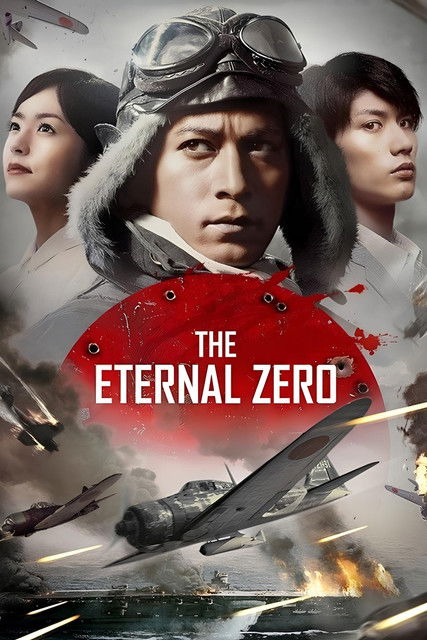
The Eternal Zero
2013
No user ratings available yet
Diversity score: 2.1 out of 10

2019
Director
Takashi Yamazaki
Runtime
130 minutes
Average Rating
No ratings yetSynopsis
It is the early 1930s and the command of the Japanese Imperial Navy determines to construct the world's biggest and most formidable battleship, Yamato. One of the admirals, Yamamoto Isoroku, disagrees. He recruits the upstart and mathematics' expert Tadashi Kai who discovers there are discrepancies between the official cost estimates and the actual figures. They soon find out that they have stumbled upon a conspiracy.
Overall Score
Fair
Category Breakdown
LGBTQ+ Representation
The film lacks any visible LGBTQ+ characters or narratives. It adheres strictly to the social constraints of the 1930s Japanese Imperial Navy setting.
Gender Representation
Agency is almost exclusively held by male figures like Tadashi Kai and Yamamoto Isoroku. The plot focuses on military conspiracies rather than deconstructing gender roles.
Racial & Ethnic Diversity
The cast is largely homogeneous, reflecting the historical reality of the Japanese Imperial Navy. The narrative maintains a singular ethnic context without diverse casting.
Religious & Cultural Diversity
The story explores skepticism toward centralized power and institutional infallibility. It centers on a mathematician uncovering corruption within a massive state project.
Disability Representation
There are no depictions of visible or invisible disabilities that drive character arcs. No such elements serve as central narrative components.
Strengths
Areas for Improvement
AI Analysis
The film functions as a historical procedural that prioritizes technical drama and period authenticity over social representation. Its narrative focus remains on the intersection of human struggle and technological advancement within a specific military hierarchy. While the film offers a critique of institutional transparency and systemic corruption, it does not attempt to disrupt demographic norms. The story is deeply rooted in the socio-political milieu of 1930s Japan, which limits its breadth of representation. Ultimately, the work succeeds as a historical drama but lacks intentionality regarding marginalized identities or contemporary social perspectives.
No reviews yet. Be the first to share your thoughts on this movie!
Use the rating form above to leave a star rating and optional review.