
Maybe It's Love
1984
No user ratings available yet
Representation score: 2.4 out of 10
Representation Score
Fair
1983
Director
Im Kwon-taek
Runtime
94 minutes
Average Rating
No ratings yetNew Showbiz Analysis
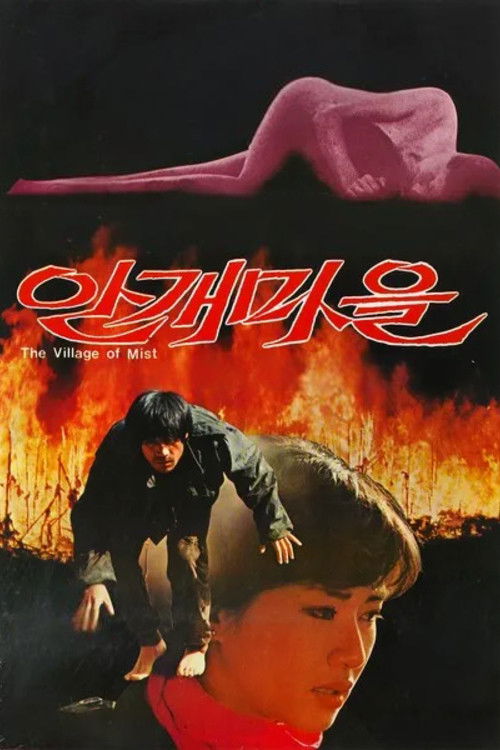
The Village of Mist provides a culturally specific lens by centering a South Korean narrative within a traditionalist framework. It effectively uses a female protagonist to explore the tension between individual ability to act and closed social systems. While the film succeeds in offering a non-Western perspective and subverting gendered hierarchies through its lead character, it lacks explicit data regarding LGBTQ+ identities or disability representation. The narrative's strength lies in its examination of communal power dynamics and the intrusion of outsiders into established social orders.
Category Breakdown
The film does not explicitly show any LGBTQ+ identities or themes. A mysterious vagabond might hint at social disruption, but there is no confirmed representation of LGBTQ+ characters.
A female protagonist holds a position of intellectual authority as a teacher. This challenges traditional rural hierarchies by placing a woman at the center of the village's social change.
The film offers a non-Western perspective by centering a domestic South Korean narrative. It avoids Western-centric homogeneity by focusing on a localized, ethnic community with high character's ability to drive the story.
The story explores the tension between modern institutional structures and traditional, insular communal life. The isolated village setting suggests a critique of how modern systems interact with established social traditions.
There is no mention of characters with visible or invisible disabilities. The narrative focus remains on the social dynamics between the teacher, the villagers, and the vagabond.
Present on Screen
Limited or Absent
Official Synopsis
A young South Korean woman moves to an isolated mountain village, where all of the villagers are related except for a mysterious vagabond, to take up her first teaching post.
1984

2016

1975

1962

2012

1987

1972

2020
No reviews yet. Be the first to share your thoughts on this movie!
Use the rating form above to leave a star rating and optional review.