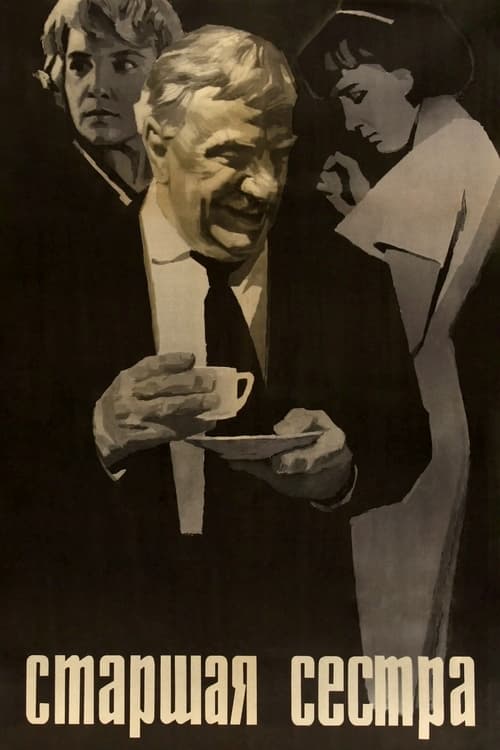
Elder Sister
1967
No user ratings available yet
Representation score: 3.6 out of 10
Representation Score
Fair
1972
Director
Yuli Karasik
Runtime
94 minutes
Average Rating
No ratings yetNew Showbiz Analysis
The film is a historically accurate adaptation that centers on psychological deconstruction rather than modern demographic representation. While it lacks racial and LGBTQ+ diversity, it provides a nuanced look at women's ability to drive the story. The narrative highlights the breakdown of internal and social structures without focusing on political activism.
Category Breakdown
The film follows traditional heterosexual relationships without any depiction of same-sex intimacy.
Women play key roles in both the emotional and professional aspects of the story. Characters like Nina and Arkadina showcase intellectual independence despite the societal constraints of the 19th century.
The cast is made up of actors from similar ethnic backgrounds, reflecting the historical setting of a late 19th-century Russian estate. There is no attempt at color-blind casting.
The narrative focuses on personal psychological truths rather than religious teachings. It examines the intelligentsia class while questioning the stability of the traditional family unit.
Psychological distress and existential alienation are used to drive the tragic plot, but there is no direct exploration of neurodivergence.
Present on Screen
Limited or Absent
Official Synopsis
Events unfold on the estate of Pyotr Sorin, which brought together representatives of secular society - actress Irina Arkadina, the host's sister and her lover, the famous writer Trigorin. Sorin’s nephew, Konstantin Treplev, in love with a neighbor girl Nina Zarechnaya, who dreams of becoming an actress, writes for her a play that she plays in the scenery of Sorin’s garden.
1967
1964
1980
1964

2018

1969
1980
1999
No reviews yet. Be the first to share your thoughts on this movie!
Use the rating form above to leave a star rating and optional review.