
I Don't Belong Anywhere: The Cinema of Chantal Akerman
2015
No user ratings available yet
Representation score: 9.4 out of 10
Representation Score
Good
1997
Director
Chantal Akerman
Runtime
64 minutes
Average Rating
No ratings yetNew Showbiz Analysis
Chantal Akerman’s self-portrait is a masterful example of structural subversion. By centering her own perspective, she dismantles traditional cinematic hierarchies and validates the domestic and psychological realms often overlooked by mainstream media. The film's strength lies in its intellectual rigor and its ability to elevate the mundane into profound art. It prioritizes subjective truth and the female perspective over conventional, action-oriented storytelling. However, the work is limited by its narrow geographic and demographic focus. The emphasis on European landscapes and a singular, non-diverse perspective restricts its broader impact.
Category Breakdown
The film operates as an autobiographical essay rather than a character-driven narrative. Though it doesn't feature explicit LGBTQ+ romantic relationships, it rejects traditional heterosexual storytelling structures, aligning with queer theory.
The film emphasizes the female perspective, shifting focus from male-centric action to internal and domestic spaces. It elevates the everyday and private into subjects of intellectual and aesthetic exploration.
The film lacks a diverse cast, focusing instead on European urban and suburban settings. The absence of intersecting racial dynamics reduces its overall score.
By emphasizing personal memory over broad historical narratives, the film challenges established social and cultural structures. It promotes secular thought by focusing on individual experiences rather than religious frameworks.
The work explores the sensory experience of time and the psychological weight of space. While it doesn't explicitly represent disabilities, it provides a nuanced look at non-traditional cognitive engagement.
Present on Screen
Limited or Absent
Official Synopsis
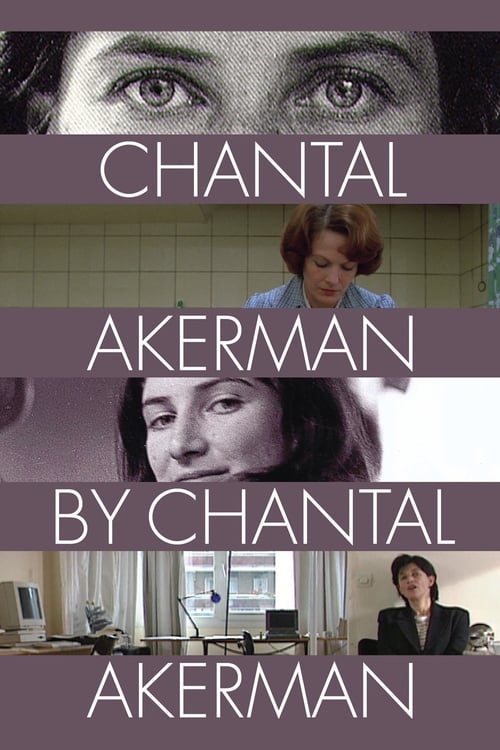
Janine Bazin and André Labarthe approached Chantal Akerman about making a film for the series; eagerly, Akerman proposed a number of filmmakers—but all had already been done. So she suggested…“How about me?” Akerman creates a fascinating self-portrait that takes us through her career, aided by critics Emmanuel Burdeau and Jean Narboni and filmmaker Luc Moullet.
2015
2008
1972
1989
1977
1995
1990

2004
No reviews yet. Be the first to share your thoughts on this movie!
Use the rating form above to leave a star rating and optional review.