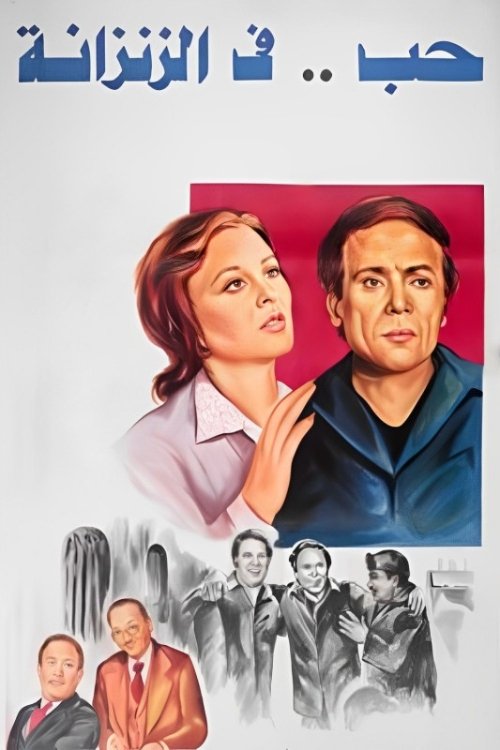
Love in a Jail Cell
1983
No user ratings available yet
Diversity score: 5.2 out of 10

2004
Director
Manolo Matji
Runtime
98 minutes
Average Rating
No ratings yetSynopsis
September 1987. In a shootout with police, Juan Jose Garfia makes a triple murder. Sentenced to more than one hundred years, is a rebel prisoner, clever and elusive that it has nothing to lose and nobody to worry about. In 1991, manages to escape from a police van jumping up. Stopped after two months of robberies and shootings, Garfia leads several prison riots, against which the authorities takes as a measure subjecting prisoners to a more contentious special isolation regime. Garfia, the prisoner with the highest IQ, avoiding drugs, which seems immune to punishment, and lives two years without seeing anyone, held in a tiny cell and subjected to continuous harassment. There he meets Marimar, a nurse I can barely speak, but between both of a current of mutual understanding.
Overall Score
Fair
Category Breakdown
LGBTQ+ Representation
The story centers on a romantic connection between a male prisoner and a female nurse. No non-heteronormative identities or critiques of heteronormativity are present.
Gender Representation
Marimar provides emotional sustenance to the protagonist, potentially subverting traditional caregiver hierarchies. This interaction allows a female character to influence a dominant male figure in a vulnerable position.
Racial & Ethnic Diversity
The setting and character names suggest a Latin American context. The film operates within a localized cultural framework rather than a purely Western or Anglo-Saxon lens.
Religious & Cultural Diversity
The film critiques centralized authority by framing state institutions as sources of systemic oppression. It moves toward moral relativism by portraying the protagonist as a clever, elusive figure.
Disability Representation
The narrative explores the psychological toll of extreme isolation and sensory deprivation. It functions as a study of mental health within a punitive confinement regime.
Strengths
Areas for Improvement
AI Analysis
Hours of Light is a character-driven drama that prioritizes the psychological struggle of an individual against an oppressive carceral system. It finds its depth in the tension between institutional authority and personal resilience. The film lacks explicit LGBTQ+ representation or a broad spectrum of intersectional casting. However, it succeeds in challenging the perceived legitimacy of state-sponsored pressure and avoids a simplistic hero-versus-villain moral framework. Ultimately, the work focuses on individual agency within a specialized isolation regime rather than diverse demographic breadth.
1983

2015

2016

2020
No reviews yet. Be the first to share your thoughts on this movie!
Use the rating form above to leave a star rating and optional review.