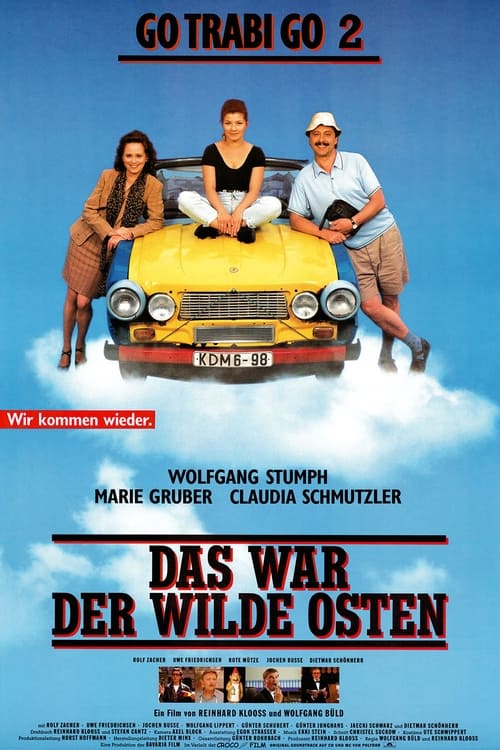
Go Trabi Go 2: Those Were the Days of the Wild East
1992
No user ratings available yet
Representation score: 5.0 out of 10
Representation Score
Limited
1992
Director
Heiko Schier
Runtime
86 minutes
Average Rating
No ratings yetNew Showbiz Analysis
Everything's a Lie is a social satire that prioritizes the exploration of class and political transition over diverse identity. It uses the collapse of the GDR to examine how shifting socio-economic landscapes create new hierarchies and personal instability. The film's primary value lies in its cultural critique of the reunification process. Rather than celebrating the shift to capitalism, it portrays it as a disruptive force that leaves former social pillars in a state of precariousness. However, the work remains narrow in its demographic scope. It lacks meaningful representation regarding race, gender roles, or LGBTQ+ identities, focusing instead on the divergent paths of two male comedic icons.
Category Breakdown
The film lacks explicit LGBTQ+ characters or narratives. The story focuses on the professional and personal struggles of male protagonists within a traditional social framework.
The narrative centers on male-driven competition and crisis. While a wife is mentioned, her role serves primarily as a catalyst for the male lead's development through infidelity.
Set during German reunification, the film appears to reflect a homogeneous demographic. It lacks significant racial or ethnic diversity within its localized study of the GDR transition.
The film offers a strong critique of Western capitalist structures. It deconstructs the idealized narrative of reunification by highlighting the systemic disruption and instability caused by the transition.
There is no evidence of characters with physical or neurodivergent disabilities. The narrative does not address disability representation.
Present on Screen
Limited or Absent
Official Synopsis
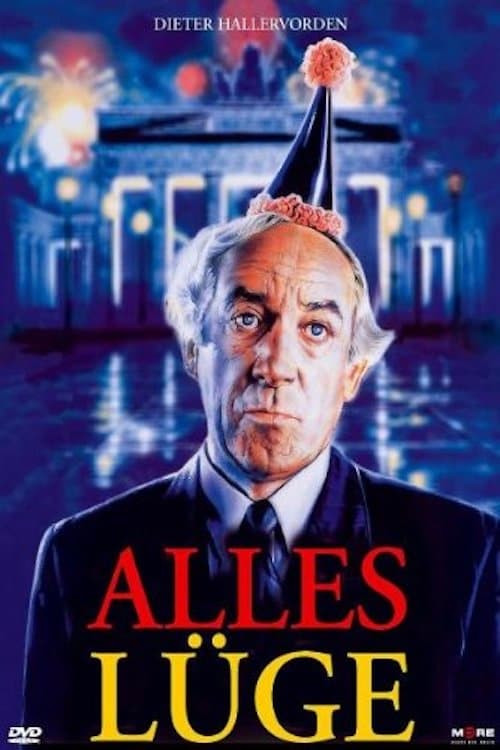
Erich Kasulke and Rudolf Portmann are comedian stars of the former GDR. When the Wall falls, so does their success. Portmann becomes a successful businessman, while Kasulke tries to continue working on the comedy circuit - without success. When his wife also cheats on him, he decides to start a new life in Berlin. There he quickly meets his old friend Portmann, who has built up a huge company. He offers him a job. But Erich puts the entire company in danger...
1992
1991
2001
1985
2017
1991
1999
2004
No reviews yet. Be the first to share your thoughts on this movie!
Use the rating form above to leave a star rating and optional review.