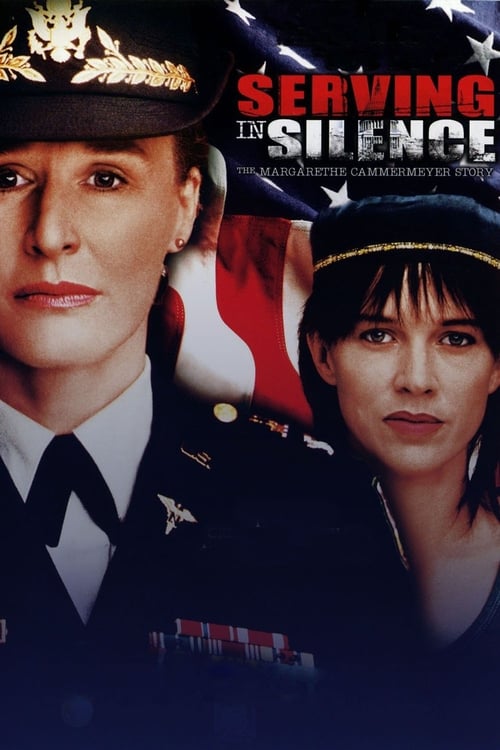
Serving in Silence - The Margarethe Cammermeyer Story
1995
No user ratings available yet
Representation score: 6.0 out of 10

Representation Score
Good
1997
Director
Chris Oxley
Runtime
87 minutes
Average Rating
No ratings yetNew Showbiz Analysis
The Investigator is a character-driven drama that uses a specific historical moment to examine the conflict between personal truth and systemic enforcement. It challenges social norms by focusing on a underrepresented perspective within a rigid hierarchy. The film's main strength lies in its nuanced exploration of identity politics. By focusing on the internal struggle of a sergeant facing a court-martial for her sexuality, it provides a powerful critique of institutional oppression. However, the narrative seems localized, with limited evidence of racial or ethnic diversity beyond the implied sectarian tensions of Northern Ireland. The focus remains heavily on the protagonist's specific social and sexual identity.
Category Breakdown
The film focuses on a woman exploring her sexual identity within a strict military environment. It critiques the assumption that everyone is straight by showing her policing others while discovering her own nature.
A female sergeant is placed in a position of high-stakes authority and professional expertise. The narrative highlights her intellectual resilience and control over her life rather than traditional domestic roles.
The setting in Northern Ireland implies a landscape shaped by sectarian tension. However, there is no specific evidence of a diverse or non-Anglo-Saxon majority cast.
The story depicts Western military and legal systems as oppressive toward individual identity. Flashbacks are used to show the instability of military traditions and institutional morality.
There is no discernible evidence regarding the portrayal of physical or neurodivergent disabilities.
Present on Screen
Limited or Absent
Official Synopsis
1989: Caroline Meagher is a sergeant with the Royal Military Police, with 12 years' experience, stationed in Northern Ireland. Two men from internal affairs grill her for four days: someone has accused her of being a lesbian. It's an offense that leads to court martial. In a series of flashbacks, we see her enthusiasm when she joins the force, her various assignments including investigating suspected lesbians, and her own slow discovery of her sexual nature. She, like others in her situation, must go to great lengths to avoid detection. Once reported, will she withstand the interrogation? Meagher herself comments on camera at the end of the film.
1995

1961

2018

1980

2006

2012

2001

1997
No reviews yet. Be the first to share your thoughts on this movie!
Use the rating form above to leave a star rating and optional review.