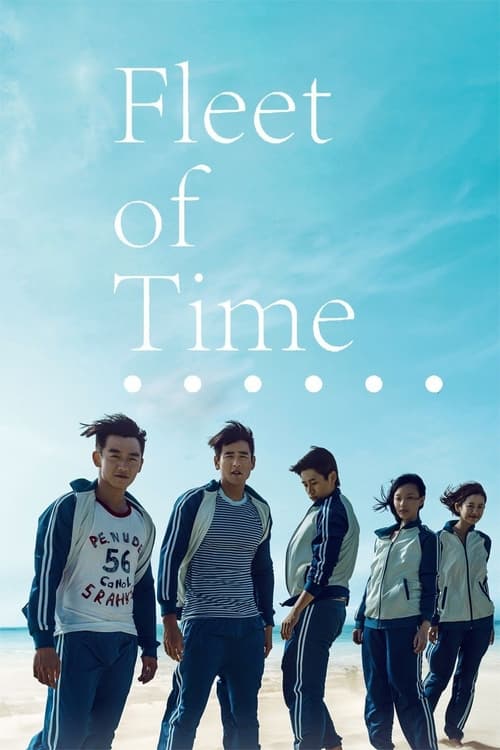
Fleet of Time
2014
No user ratings available yet
Representation score: 2.2 out of 10

Representation Score
Fair
2017
Director
Chun-Yi Hsieh
Runtime
105 minutes
Average Rating
No ratings yetNew Showbiz Analysis
Take Me to the Moon is a sentimental melodrama that prioritizes emotional resonance and the mechanics of regret over disrupting social hierarchies. While it offers character depth through its exploration of ambition, it remains within traditional genre boundaries. The film functions as a character-driven study of causality and personal desire. It uses a time-travel mechanic to explore the tension between individual dreams and societal pressures, yet it does not engage in systemic critique. Ultimately, the work adheres to established cinematic structures. It focuses on romantic loss and the 'what if' of destiny rather than promoting multi-layered identity politics or subverting cultural norms.
Category Breakdown
The story centers on a traditional romantic relationship between the protagonist and En Pei. It does not explicitly address non-binary gender identities or challenge the assumption that everyone is straight.
En Pei’s pursuit of her dreams highlights female empowerment. However, her ambition is portrayed through a tragic and cautionary lens.
The film features a predominantly East Asian cast, reflecting its Taiwanese origins. It maintains cultural homogeneity without attempting to deconstruct specific casting norms.
The narrative explores themes of memory and regret within a conventional emotional framework. It does not prioritize secularism or the deconstruction of traditional values.
There is no evidence regarding the inclusion or portrayal of physical or neurodivergent disabilities within the film's narrative.
Present on Screen
Limited or Absent
Official Synopsis
Zheng Xiang reunites with the members of his high school band and reminisces about their lead singer and his past love, En Pei, whose pursuit of her dreams ended in tragedy. He regrets encouraging her to join the pageant, wondering if she would have died if he hadn't done so. Drunk after the memorial, he's suddenly transported back to the past, where he sets out to stop En Pei from making the same mistake.
2014

2012

2022

2015
2008
2004

2017

2016
No reviews yet. Be the first to share your thoughts on this movie!
Use the rating form above to leave a star rating and optional review.