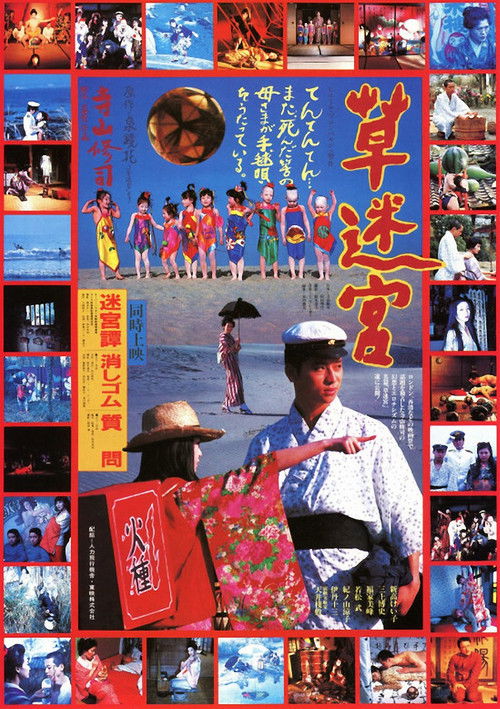
The Hourglass Sanatorium
1973
No user ratings available yet
Representation score: 6.0 out of 10
Representation Score
Good
1979
Director
Shūji Terayama
Runtime
42 minutes
Average Rating
No ratings yetNew Showbiz Analysis
Shūji Terayama employs avant-garde surrealism to challenge traditional social and temporal hierarchies. Through a psychological labyrinth, the film explores fluid identity and moves away from linear storytelling. The work effectively subverts cultural and familial norms using mythic elements. However, the lack of explicit LGBTQ+ identities and diverse casting limits its broader diversity impact. Ultimately, the film is a sophisticated exploration of the subconscious, prioritizing subjective truth over conventional social scripts.
Category Breakdown
The film touches on sexual awakening and growing up, focusing on internal desires rather than specific LGBTQ+ identities.
A strong female character, portrayed as a witch, challenges traditional feminine stereotypes by emphasizing mystery and ability to act over domesticity.
The film remains within a culturally specific Japanese context and does not show diverse casting or subversion of ethnic homogeneity.
The film uses surreal time-warping to prioritize psychological relativism, critiquing familial stability through the deconstruction of the maternal figure.
There is no indication of the portrayal of physical or neurodivergent disabilities in the film.
Present on Screen
Limited or Absent
Official Synopsis
Akira is haunted by a "bouncing ball" song that he remembers his mother singing when he was a small child, and now on the verge of a sexually active adulthood, he wants to find the origins of the song. The young man ostensibly wanders into a time-warp in which aspects from his childhood and adulthood mix together. In this never-never land he comes across a beautiful woman/witch who is lost inside the labyrinth of her mansion, just as the young man is lost in the labyrinth of time — and on some levels, perhaps the labyrinth of his subconscious.
1973

1974
1966

1972
1987

2001

1969

1995
No reviews yet. Be the first to share your thoughts on this movie!
Use the rating form above to leave a star rating and optional review.