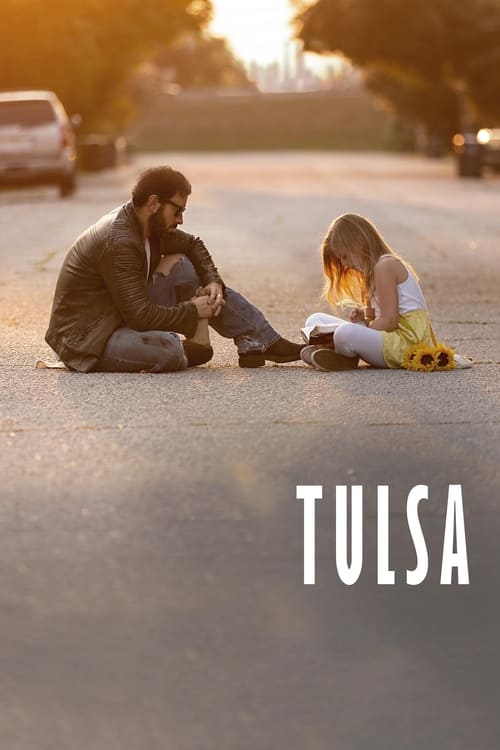
Tulsa
2020
No user ratings available yet
Representation score: 1.8 out of 10

Representation Score
Good
2026
RDirector
Jordan Firstman
Runtime
126 minutes
Average Rating
No ratings yetNew Showbiz Analysis
Club Kid opens on the neon-drenched, high-energy world of a New York club promoter, a space where identity is performance and time is currency. Jordan Firstman’s debut film uses this setting not as a backdrop for moral judgment, but as a lived reality for Peter, a gay man whose life is defined by the rhythm of the dance floor. The arrival of his 10-year-old son, a child he never knew he had, disrupts this rhythm, forcing a collision between the ephemeral joy of the club and the enduring weight of parental responsibility. The film’s argument is that these two worlds are not mutually exclusive; Peter’s queerness and his fatherhood are both sources of strength, not contradiction. The sold meaning is one of integration: the "washed up" party lifestyle is not a failure but a phase that can be reconciled with stability. The camera loves the club scenes, capturing their energy and community, but it also lingers on the quiet, tender moments between Peter and his son, suggesting that the latter is the true anchor. The diversity of the cast, including Kirby Howell-Baptiste and Diego Calva, reflects the actual texture of New York’s queer scene, where race and ethnicity are part of the fabric but not the primary lens of the story. The ending, implied by the "universal acclaim" and the focus on "unexpected visit," likely settles into a new normal where Peter has found a balance. The film does not punish Peter for his past hedonism, nor does it idealize the club scene as a permanent solution. Instead, it presents a nuanced portrait of a man who is both a product of his environment and a creator of his future. The last image is not a return to the club, but a forward-looking gesture toward a life that holds both the past and the present. This is a film that trusts its audience to understand that identity is not a single note, but a chord.
Category Breakdown
Peter’s gay identity is the film’s normal backdrop, not a crisis. The narrative treats his orientation as unremarkable, focusing instead on fatherhood. The cast includes Cara Delevingne and Kirby Howell-Baptiste, signaling a diverse queer ensemble.
Peter is a single father to a 10-year-old, challenging the default male absentee trope. The film centers a man’s domestic responsibility without a competing male authority figure. Cara Delevingne and Kirby Howell-Baptiste appear as significant figures, suggesting non-traditional family structures.
The cast includes Kirby Howell-Baptiste, Diego Calva, and Nigil Whyte, providing visible diversity in a New York setting. However, the protagonist is white, and the diversity functions as supporting texture rather than driving the central conflict or moral argument.
The film critiques the "washed up" party lifestyle, framing traditional stability as the corrective to hedonism. It values authentic connection over performance, aligning with a progressive view of family as chosen and fluid. The New York club scene is depicted with affection, not judgment.
No characters with disabilities are named or depicted in the available evidence. The film’s focus on age and lifestyle does not extend to disability representation. This category is absent from the on-screen inventory.
Present on Screen
Limited or Absent
Official Synopsis
A hard-partying New York City club promoter sees his whirlwind lifestyle upended by the arrival of the 10-year-old son he never knew he had.
2020
2024
2022
2023

2024

2013

2019
2022
No reviews yet. Be the first to share your thoughts on this movie!
Use the rating form above to leave a star rating and optional review.