TPB AFK: The Pirate Bay - Away from Keyboard
2013
No user ratings available yet
Representation score: 1.6 out of 10
Representation Score
Limited
2006
Director
Russell Michaels, Simon Ardizzone
Runtime
82 minutes
Average Rating
No ratings yetNew Showbiz Analysis
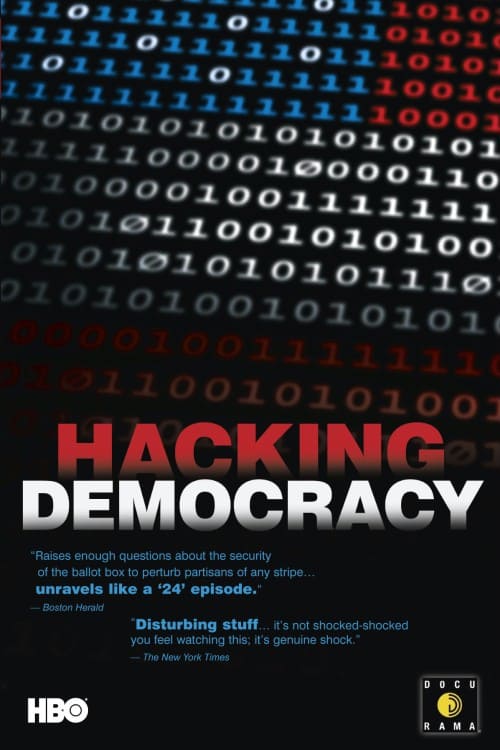
Hacking Democracy is a specialized investigative documentary that prioritizes systemic critique over demographic representation. Its primary focus is the technical and political forensics of election security, which naturally limits the breadth of its character studies. The film excels in its cultural critique, challenging the integrity of Western institutions and the role of private corporations in public infrastructure. However, this narrow investigative lens results in low scores for traditional identity-based categories. Ultimately, the work functions as a study of institutional transparency rather than a diverse social tapestry, making it a niche technical exposé rather than a broad social portrait.
Category Breakdown
The documentary focuses solely on electoral technology and cybersecurity. It does not include any characters or stories centered around sexual orientation or gender identity.
The film's narrative is driven by technical experts and political analysts. The subject matter leans towards traditionally male-dominated professional spheres such as cybersecurity and election administration.
Interviewees represent a typical professional demographic of the time. The film lacks a proactive effort to highlight perspectives reflecting multiple aspects of identity, focusing instead on software and hardware mechanics.
The film offers a sharp critique of capitalist structures and the privatization of democratic processes. It frames the tension between corporate interests and public accountability as a systemic failure.
The scope of the film is confined to political technology and election security. It does not address disability, neurodivergence, or physical health.
Present on Screen
Limited or Absent
Official Synopsis
Documentary film investigating allegations of election fraud during the 2004 U.S. presidential election. Electronic voting machines count approximately 90% of America's votes in county, state and federal elections. The technology is also increasingly being used across the world, including in Canada, the United Kingdom, Europe and Latin America. The film uncovers incendiary evidence from the trash cans of Texas to the ballot boxes of Ohio, exposing secrecy, votes in the trash, hackable software and election officials rigging the presidential recount.Ultimately proving our votes can be stolen without a trace "Hacking Democracy" culminates in the famous 'Hursti Hack'; a duel between the Diebold voting machines and a computer hacker from Finland - with America's democracy at stake.
2013
2016

2020
2012

2018

2013

2025
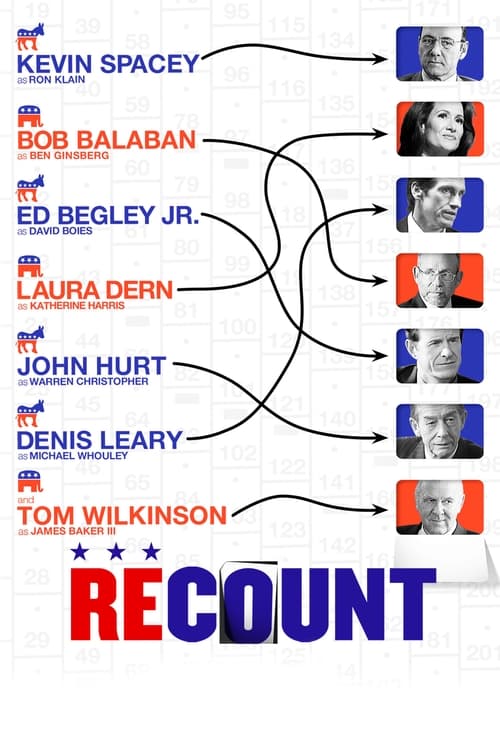
2008
No reviews yet. Be the first to share your thoughts on this movie!
Use the rating form above to leave a star rating and optional review.