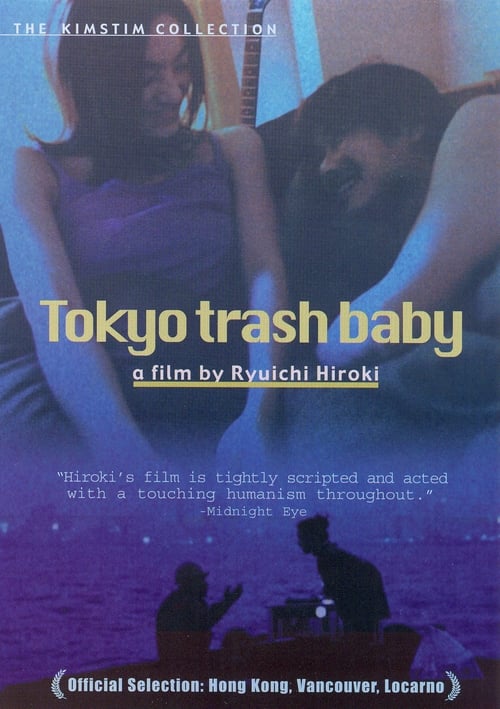
Tokyo Trash Baby
2000
No user ratings available yet
Representation score: 5.8 out of 10
Representation Score
Fair
2017
Director
Tetsuya Takehora
Runtime
71 minutes
Average Rating
No ratings yetNew Showbiz Analysis
The film primarily serves as a character study of social reintegration through unconventional means. It challenges traditional career paths and social hierarchies by focusing on a transactional social economy. However, the work remains largely within the bounds of conventional demographic representation. The storytelling framework is predominantly oriented toward straight relationships and lacks significant racial or queer diversity. While the protagonist's transition from a recluse to a worker offers a critique of social utility, the cast and narrative structure stay within established regional and genre norms.
Category Breakdown
The story focuses on a heterosexual relationship between Teruki and Yuki, with no explicit mention of queer identities or challenges to the assumption that everyone is straight.
Yuki plays a key role in Teruki's social reintegration by initiating the business, but the film may still rely on traditional romantic formulas.
The film features a homogeneous cast typical of the Japanese film industry, without significant racial blending.
The narrative critiques conventional capitalist ideas of labor through the 'rent-a-person' service. It examines social alienation and the breakdown of traditional employment structures.
There is no direct mention of physical disabilities or neurodivergence, but Teruki’s status as a recluse touches on themes of social withdrawal.
Present on Screen
Limited or Absent
Official Synopsis
After repeatedly failing in his job search, Teruki eventually became a recluse. Yuki invites him to join the ‘rent-a-person’ business. Naturally earnest, Teruki makes a fresh start and begins tackling various requests together with Yuki. [Exists in two versions with two different titles: the original R18 version (Rental College Student, Carnal Desire in Arrears) and the R15 version (Beauty and the Idiot)].
2000

2000

2011
2009

2014
2008

2011

2009
No reviews yet. Be the first to share your thoughts on this movie!
Use the rating form above to leave a star rating and optional review.