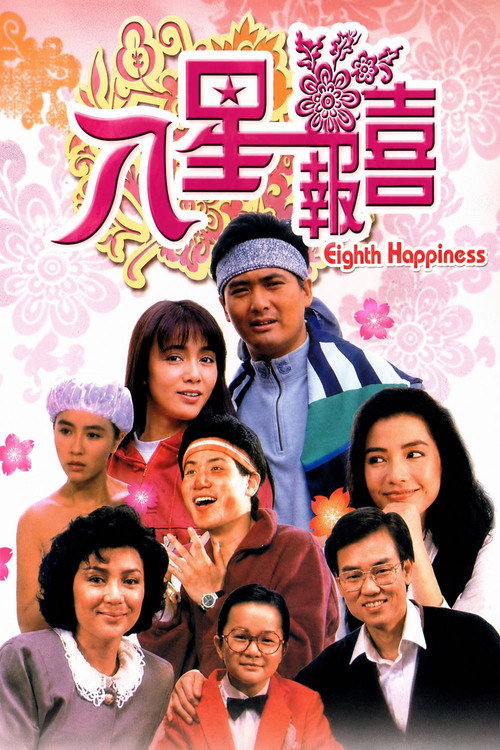
The Eighth Happiness
1988
No user ratings available yet
Representation score: 3.8 out of 10
Representation Score
Fair
1987
Director
Eric Tsang Chi-Wai
Runtime
88 minutes
Average Rating
No ratings yetNew Showbiz Analysis
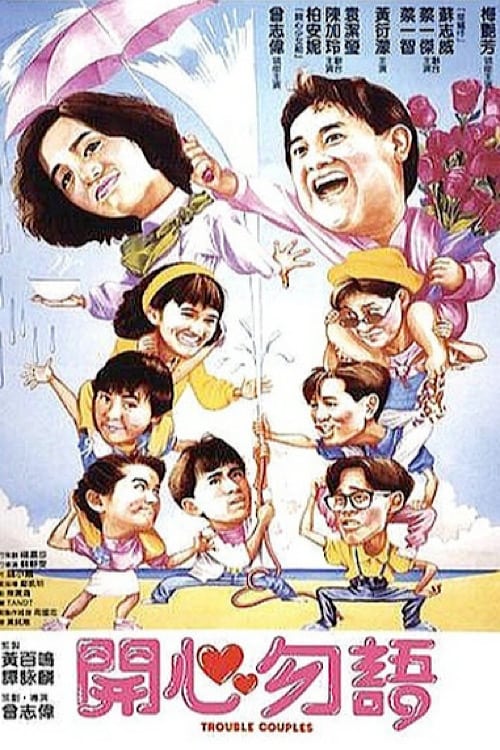
Trouble Couples presents a nuanced exploration of domestic power dynamics by placing a woman in the role of the primary provider. This shift from the traditional male-breadwinner model provides a refreshing perspective within a comedic framework. However, the film's progressive potential is limited by its adherence to traditional social expectations. The central conflict revolves around the pressure to marry, reinforcing the idea that a woman's social standing is tied to her relationship to men. Ultimately, the film offers a culturally specific snapshot of 1980s Hong Kong. It balances female empowerment with traditional constraints, resulting in a narrative that is both liberating and conventionally bound.
Category Breakdown
The story centers on traditional romantic relationships and the societal pressure to marry. It does not include any characters with non-conforming gender identities or critiques of the assumption that everyone is straight or cisgender.
The film challenges traditional gender roles by focusing on a female breadwinner and a matriarchal structure. However, it relies on the 'spinster' cliché, linking a woman's value to her marital status.
The production features an ethnically homogeneous cast, reflecting the social dynamics of 1987 Hong Kong. It does not blend multiple ethnicities but avoids racial stereotypes.
The plot is grounded in traditional East Asian social values and the importance of filial piety. It emphasizes family unity and the significance of maintaining social respectability through marriage.
The narrative does not mention or depict any visible or invisible disabilities.
Present on Screen
Limited or Absent
Official Synopsis
Mui Da Hsien (Anita Mui), the eldest sister, is the only breadwinner in the family. She spends all her time in raising up and discipline her three sisters, Yee Hsien (Ann Bridgewater), Sarm Hsien (Charine Chan), and Sai Hsien (Fennie Yuen). They are aware of Da Hsien is becoming a spinster and they are not allowed to get married if Da Hsien remains single. So they decide to find her a husband. So all their boyfriends very anxious to give a helping hand. They find Tsang To Choy (Eric Tsang) who just has broken heart is the right man, but Tsang is scared away by Da Hsien's shrew temper...
1988
2006
2009
1993
1993
1990
1984
1994
No reviews yet. Be the first to share your thoughts on this movie!
Use the rating form above to leave a star rating and optional review.