
Ay, Carmela!
1990
No user ratings available yet
Representation score: 8.6 out of 10
Representation Score
Limited
1983
Director
Mats Arehn
Runtime
97 minutes
Average Rating
No ratings yetNew Showbiz Analysis
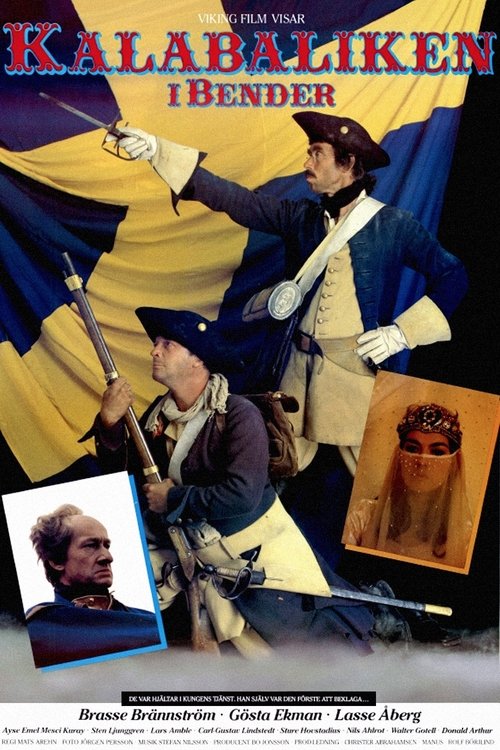
Mats Arehn uses satire to dismantle the 'Great Man' theory of history. By replacing heroic dignity with chaos, the film moves away from singular Western narratives to highlight the absurdity of colonial-era geopolitics. While the film lacks modern markers for LGBTQ+ and disability representation, it achieves a moderate score through cultural skepticism. It effectively challenges Western military exceptionalism. The narrative's strength lies in its postmodern view of history, favoring social disorder over institutional authority.
Category Breakdown
The film centers on geopolitical strategies and the journey of Swedish soldiers. It does not include any non-straight or non-cisgender identities or narratives that question the assumption that everyone is straight or cisgender.
Gender roles are shaped by the historical context, with a princess used as a political pawn. The film uses satire to undermine traditional masculine leadership by depicting power as chaotic misunderstanding.
The narrative shifts from Eurocentric war epics to focus on conflicts within the Ottoman Empire. This setting requires a multicultural cast through interactions between Swedish military personnel and the Turkish Sultanate.
The film criticizes Western imperial ambitions by presenting the Swedish King's presence as a burden. It employs absurdity to challenge the sanctity of Western military prestige and statecraft.
There is no apparent representation of visible or invisible disabilities. No characters with disabilities are used as narrative devices.
Present on Screen
Limited or Absent
Official Synopsis
The famous Swedish Karoliner army has suffered its biggest defeat ever at Poltava in 1709. The Swedish king Karl XII is waiting in the small village of Bender for the Turkish sulton to help him defeat his arch enemy, the czar of Russia, Peter the Great. But the Turks think he's an expensive guest and want him out of Turkey. However, he refuses. The sultan then decides to send Karl XII a princess to marry him, to get him out of the country (a bride for a bribe). The two Swedish soldiers Lagercrona and Kruus are to escort the princess. They experience many different adventures on their way to Bender, namely because other Swedish soldiers and agents try to stop them from ever reaching the village, because they don't want Karl XII to leave Turkey. After their long adventure to get there and a few misunderstandings, the famous "kalabalik" of Bender, where the Turks decide to drive Karl XII out of Turkey by force, begins.
1990

1975

1969

1969
1972
1975

2005

2016
No reviews yet. Be the first to share your thoughts on this movie!
Use the rating form above to leave a star rating and optional review.