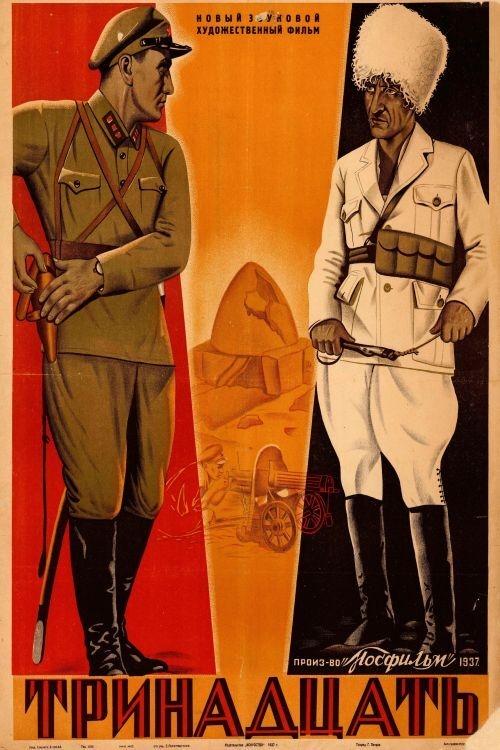
The Thirteen
1937
No user ratings available yet
Representation score: 3.8 out of 10

Representation Score
Fair
1969
Not RatedDirector
Vladimir Motyl
Runtime
83 minutes
Average Rating
No ratings yetNew Showbiz Analysis
The film achieves a moderate score by effectively challenging imperialist power structures and showcasing a rich, multi-ethnic Central Asian environment. It transcends simplistic 'civilized vs. savage' clichés to offer a nuanced cultural landscape. However, it is constrained by its adherence to traditional gender roles and the absence of LGBTQ+ characters or disability representation. Female characters are central but often lack independent influence. Overall, the work demonstrates a sophisticated, non-binary perspective on historical conflict and a critique of outdated hierarchies.
Category Breakdown
The film does not include any LGBTQ+ characters or non-straight relationships. The interpersonal dynamics revolve around traditional romantic and survivalist themes set during wartime.
The story follows a patriarchal structure where women play a reactive role to male combatants. However, the character Ostapya significantly influences the protagonist’s journey.
The film stands out by focusing on a non-Western, Central Asian setting. It avoids Eurocentric views by highlighting the clash between Soviet forces and the local Basmachi population.
The narrative critiques imperialist systems and the erosion of traditional religious authority. Bandits are portrayed with moral complexity rather than as one-dimensional villains.
There is no meaningful depiction of disability. Characters are defined by their physical abilities in combat, with no exploration of neurodivergence or chronic illness.
Present on Screen
Limited or Absent
Official Synopsis
The setting is the east shore of the Caspian Sea (today's Turkmenistan) where the Red Army soldier Fyodor Sukhov has been fighting the Civil War in Russian Asia for a number of years. After being hospitalised and then demobbed, he sets off home to join his wife, only to be caught up in a desert fight between a Red Army cavalry unit and Basmachi guerrillas. The cavalry unit commander, Rahimov, "convinces" Sukhov to help, temporarily, with the protection of abandoned women of the Basmachi guerrilla leader Abdullah's harem. Leaving a young Red Army soldier, Petrukha, to assist Sukhov with the task, Rahimov and his cavalry unit set out to pursue fleeing Abdullah.Sukhov and women from Abdullah's harem return to a nearby shore town. Soon, looking for a seaway across the border, Abdullah and his gang come to the same town...
1937
1968
1957
1977
1979
1943
1973
1988
No reviews yet. Be the first to share your thoughts on this movie!
Use the rating form above to leave a star rating and optional review.