
The Irishman
2019
No user ratings available yet
Representation score: 3.6 out of 10
Representation Score
Fair
2002
RDirector
Martin Scorsese
Runtime
168 minutes
Average Rating
No ratings yetNew Showbiz Analysis
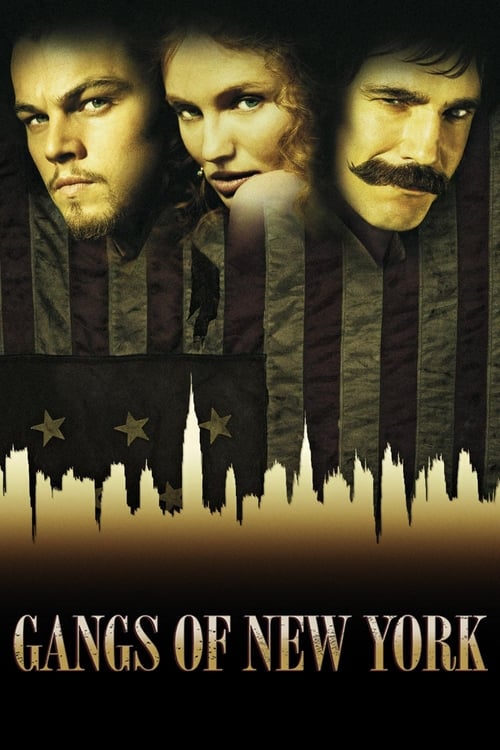
Gangs of New York offers a gritty exploration of systemic friction and the violent struggle for identity in 1860s New York. It avoids sanitized history, focusing instead on the intense conflict between Irish immigrants and Nativist factions. The film's strength lies in its deconstruction of institutional authority and its portrayal of the immigrant experience as a contested, violent process. It uses ethnic tension to critique the formation of early American identity. However, the film lacks any LGBTQ+ representation and is heavily skewed towards a male-dominated hierarchy, with women showing individual ability to act but limited structural power.
Category Breakdown
The film does not include any LGBTQ+ characters or non-cisgender identities. The social setting is portrayed through a strictly heterosexual lens, emphasizing the tribal dynamics of mid-19th-century urban life.
The story depicts a volatile, male-dominated hierarchy. Despite the female lead showing strong survival instincts, she operates within a framework of systemic violence that restricts her structural power.
The narrative focuses on the immigrant experience of the Irish diaspora and their conflicts with Nativists. It includes Black citizens within the socio-political landscape to critique exclusionary American identity.
The film effectively critiques traditional Western institutions and corrupt political systems. It highlights moral relativism, where characters are guided by situational ethics and tribal loyalty rather than universal morality.
There are no prominent depictions of visible or invisible disabilities that serve as central character arcs within the narrative context.
Present on Screen
Limited or Absent
Official Synopsis
In early 1860s New York, Irish immigrant Amsterdam Vallon is released from prison and returns to the Five Points, seeking revenge against his father's killer, William Cutting, a powerful anti-immigrant gang leader. He knows that revenge can only be attained by infiltrating Cutting's inner circle. Vallon's journey becomes a fight for personal survival and to find a place for the Irish people.
2019
1931
1972
1990

2003
1962

1987
1999
No reviews yet. Be the first to share your thoughts on this movie!
Use the rating form above to leave a star rating and optional review.