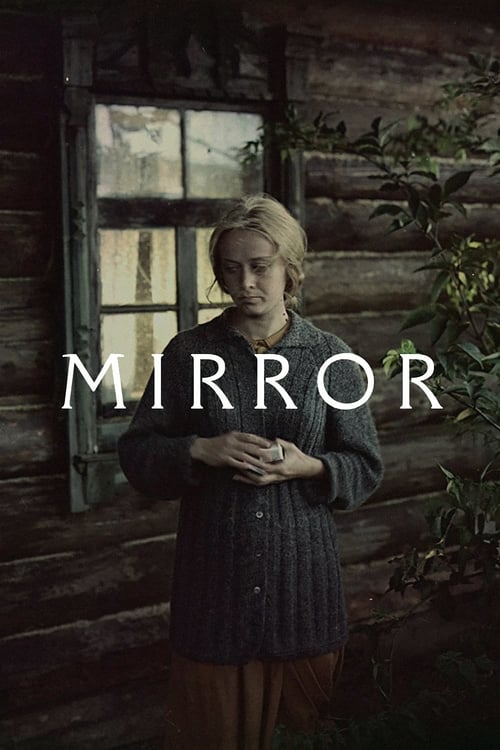
Mirror
1975
No user ratings available yet
Representation score: 3.0 out of 10

Representation Score
Limited
2024
Director
Bohdan Sláma
Runtime
124 minutes
Average Rating
No ratings yetNew Showbiz Analysis
The film opens on the quiet, unglamorous geography of a rural Czech village, grounding its drama in the specific, inescapable social web of a 1968 community. Bohdan Sláma’s *The End of the World* sells a vision of endurance: the camera lingers on Blaženka, the tavern keeper, who mediates disputes with the steady gaze of a village judge. She is the competence center, a matriarchal anchor who holds the social order together while the men around her—Děda Tondy and others—navigate the era’s pressures with gentle, affectionate irony. The film’s argument is that individual fate is inextricably linked to history, but that inner firmness and community loyalty are the true rewards. It does not critique the traditional family or the rural way of life; instead, it treats them as the stable, unmarked norm against which the chaos of 1968 is measured. The ending is not a political verdict but a quiet acceptance of the status quo, rewarding those who maintain their place in the social web. It is a film that loves its own world, finding dignity in the ordinary and strength in the enduring, without offering a liberal critique of the structures it depicts.
Category Breakdown
No queer characters or relationships appear in this rural 1968 drama. The social web remains strictly heteronormative, with no on-screen deviation from traditional pairings.
Blaženka anchors the tavern as the village’s logistical and moral hub, mediating disputes with steady competence. Men like Děda Tondy are affectionately framed as slightly out of step, but traditional family roles remain the stable, unmarked norm.
The cast is entirely Czech, reflecting the homogeneous rural setting of the 1960s. No non-white characters or ethnic tensions are depicted; the world is defined by local geography, not racial dynamics.
The film treats the nuclear family and pre-1968 Czech identity as enduring, positive foundations. The 1968 occupation serves as a backdrop for personal endurance, rewarding social loyalty over political upheaval.
No characters have visible disabilities or chronic conditions. The cast consists of able-bodied actors portraying standard rural roles, with no narrative focus on impairment or medical issues.
Present on Screen
Limited or Absent
Official Synopsis
An original story told by Uncle Igor, a son of Russian aristocrats, and his nine year old grandson Tonda. A powerful story of complicated times around 1968, a story full of contrasts: Whether it is the relation between what Grandpa's plentiful life entails and Tonda's imminent children's presence, or between poetry and fine humor and dramatic situations of military occupation. Or generally between everyday worries of a person and the pressure of great history. On grandpa's life story, mapping a big part of the 20th century traumas, one can see how much an individual's fate depends on the movement and changes of history. And how much one can defy it and maintain inner firmness and integrity. Or perhaps just dear life.
1975

1994
2019
2018
2020
1993
2020
2018
No reviews yet. Be the first to share your thoughts on this movie!
Use the rating form above to leave a star rating and optional review.