Catherine and I
1980
No user ratings available yet
Representation score: 1.9 out of 10
Representation Score
Fair
1975
Director
Petr Schulhoff
Runtime
98 minutes
Average Rating
No ratings yetNew Showbiz Analysis
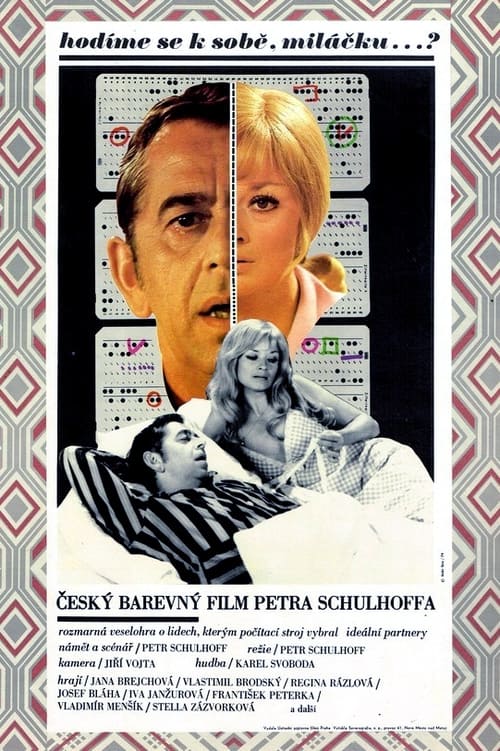
Do We Match Each Other, Darling? succeeds as a piece of social commentary, using science fiction to deconstruct the sanctity of marriage and institutional authority. It moves beyond simple domestic comedy to question how technology might influence human emotions. While the film lacks modern markers of diversity like racial or LGBTQ+ identities, it compensates through intellectual depth. It effectively challenges the traditional nuclear family structure by presenting marriage as a calculated risk rather than a social certainty. Ultimately, the film's strength lies in its skepticism of centralized systems, making it a thoughtful exploration of autonomy versus institutional compatibility.
Category Breakdown
The film does not explicitly depict LGBTQ+ identities or relationships that go beyond straight norms. However, it hints at unconventional relationship structures through technology, suggesting a move away from traditional romantic clichés.
The story challenges domestic stability by focusing on Marta's dissatisfaction and Alena's pursuit of independence. By questioning the 'happy marriage' cliché, the film offers a nuanced view of women's roles and the complexities of traditional domestic life.
The film reflects the homogeneous social environment of 1970s Czechoslovakian science fiction. There is no evidence of diverse ethnic integration or casting actors from different backgrounds, sticking to the demographic norms of its time and place.
The narrative critiques systemic control through its depiction of a cybernetic institute. It prioritizes personal emotional truth over the preservation of traditional family units, questioning the mechanization of human connections.
There are no characters with visible or invisible disabilities in the narrative. Therefore, there is no representation of disability in the work.
Present on Screen
Limited or Absent
Official Synopsis
Marta (Jana Brejchová) and Viktor (Vlastimil Brodský) celebrate the tenth anniversary of their wedding half-heartedly. They both think they don't suit together. While visiting Marta's friend Alena (Iva Janzurová), who just got married for the third time, they learn an interesting thing. It was a computer which selected a husband for Alena and she claims she is happy. The couple gets off after certain hesitation to a cybernetic institute, where the computer tells them that living together is a risk for them. At the same time the computer selects them ideal partners - Mrs Tuchlová, a doctor for Viktor, and Petr Karát, a music composer for Marta. By a coincidence Viktor and Marta meet wrong people.
1980
1973
1967
1984
1966

1986
1949
1972
No reviews yet. Be the first to share your thoughts on this movie!
Use the rating form above to leave a star rating and optional review.