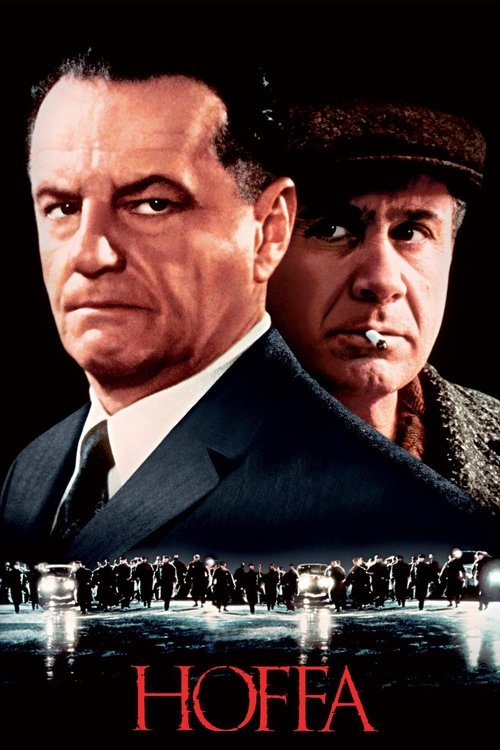
Hoffa
1992
No user ratings available yet
Representation score: 1.5 out of 10
Representation Score
Minimal
1992
RDirector
Alastair Reid
Runtime
90 minutes
Average Rating
No ratings yetNew Showbiz Analysis
The film operates as a traditional biographical drama that emphasizes historical realism over contemporary diversity. It centers on the mechanisms of institutional corruption and the power dynamics within the Teamsters Union. By focusing on a homogeneous demographic and male-centric power structures, the film lacks the intentionality needed to challenge conventional identity-based narratives. While it provides a nuanced look at moral ambiguity and systemic corruption, it remains a study of specific American institutions rather than a platform for diverse perspectives.
Category Breakdown
The film adheres to the social norms of its time, offering no depictions of non-traditional gender identities or same-sex relationships.
The power dynamics in the film are dominated by men, with women mostly relegated to supporting roles in domestic or social settings.
The cast is primarily white and Anglo-Saxon, reflecting the historical demographics of labor unions and law enforcement. Minority characters have limited influence in the central power structures.
The narrative delves into moral ambiguity through the protagonist's dual role as both a leader and informant. It focuses on the internal corruption of American institutions rather than broader cultural themes.
The film does not explore physical disabilities, neurodivergence, or mental health conditions as central narrative elements.
Present on Screen
Limited or Absent
Official Synopsis
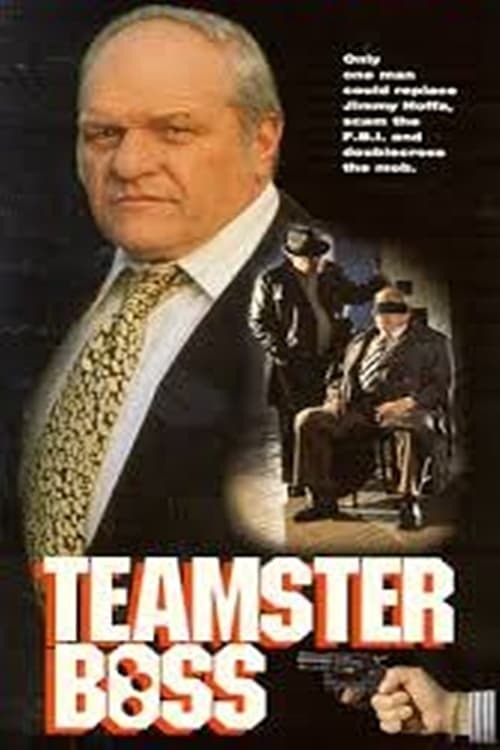
For a generation, the mobs main money machine was the Teamsters Union. When Jimmy Hoffa disappeared, the fight was on to see who could follow him. Jackie Presser was the son of a long time union board member and when he retired, Jackie was elevated to one of the most powerful position in the country; President of the Teamsters Union.
1992

1978

2010
1996

2009
1998

1991

2015
No reviews yet. Be the first to share your thoughts on this movie!
Use the rating form above to leave a star rating and optional review.