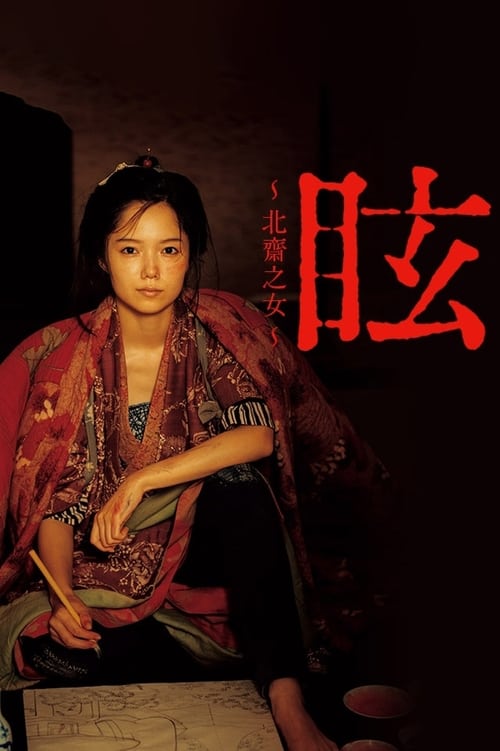
Kurara: The Dazzling Life of Hokusai's Daughter
2017
No user ratings available yet
Representation score: 6.0 out of 10

Representation Score
Good
2025
Director
Tatsushi Ōmori
Runtime
122 minutes
Average Rating
No ratings yetNew Showbiz Analysis
Hokusai's Daughter serves as a significant act of historical reclamation. By shifting the focus from the famous Hokusai to his daughter, Oi, the film disrupts the usual male-centric view of art history. It elevates a female figure from the periphery to the center of the narrative. The film's strength lies in its subversion of traditional gender roles. It replaces the cliché of the passive female muse with a protagonist defined by creative mastery and professional skill within a male-dominated field. However, the film is limited by its historical setting. While it offers a valuable non-Western perspective, the homogeneity of the Edo period restricts broader racial and LGBTQ+ representation.
Category Breakdown
The film does not explicitly show character orientations or non-binary gender identities. While it includes non-traditional family structures, there are no clear depictions of same-sex relationships.
The film challenges traditional gender roles by highlighting Katsushika Oi's artistic mastery. It emphasizes her intellect and active role in driving the story, rather than portraying her as a passive figure.
Set in Edo-period Japan, the film offers a non-Western perspective within a historically homogeneous society. It provides a meaningful look at a non-Anglo-Saxon cultural context.
The story examines the tension between individual creativity and the strict societal expectations of the Edo period. It critiques historical institutions through the lens of a pioneering artist.
There is no evidence regarding the portrayal of physical or neurodivergent disabilities in this work.
Present on Screen
Limited or Absent
Official Synopsis
The life of Katsushika Oi, daughter of Hokusai and a trailblazing female artist in Japan.
2017
2015
1981

1988
1997

2015
1995
2008
No reviews yet. Be the first to share your thoughts on this movie!
Use the rating form above to leave a star rating and optional review.