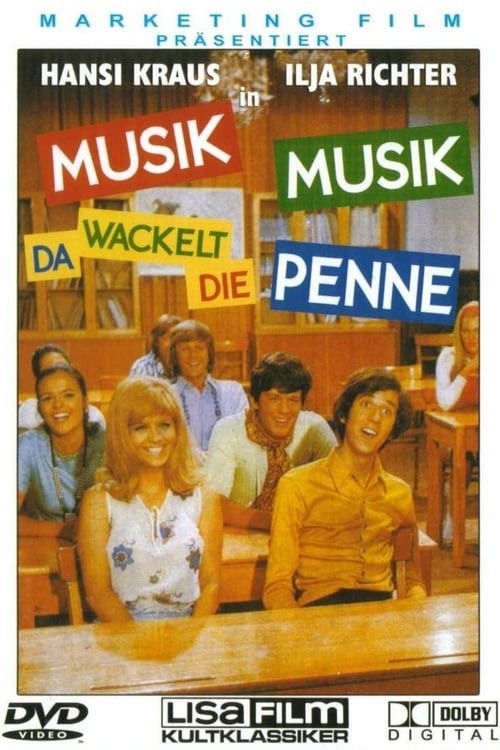
Musik, Musik - da wackelt die Penne
1970
No user ratings available yet
Diversity score: 2.6 out of 10
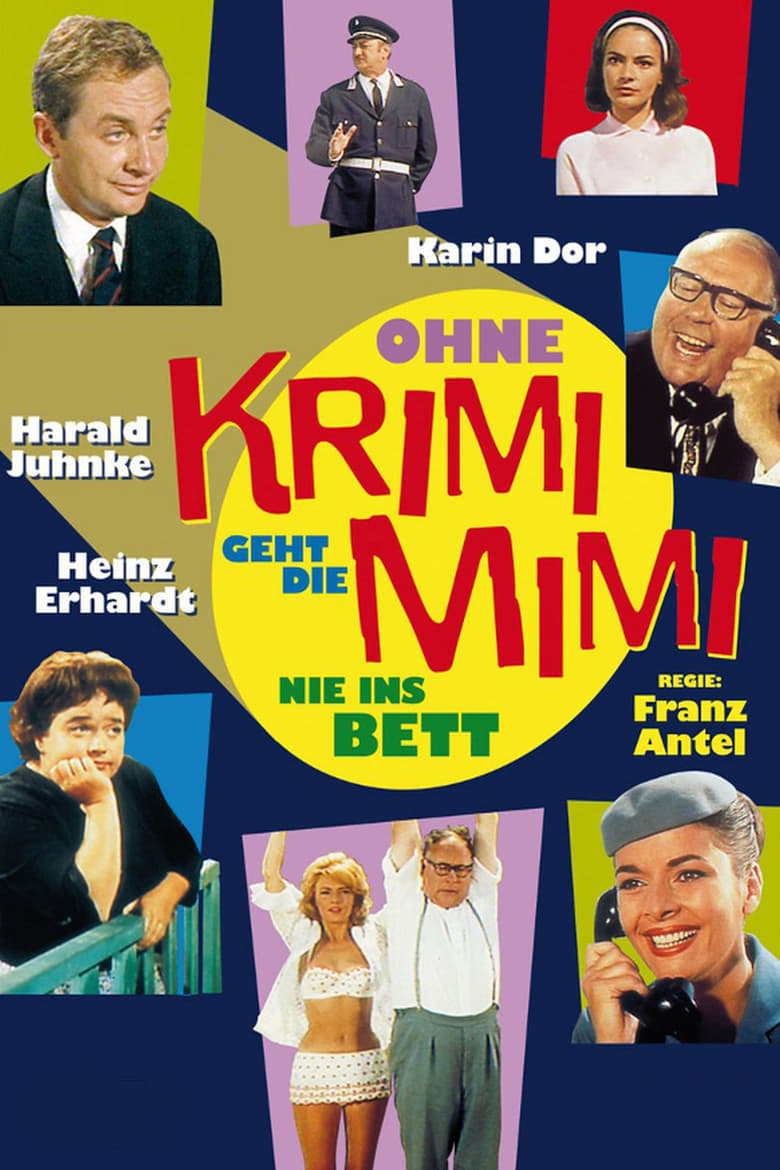
1962
Director
Franz Antel
Runtime
79 minutes
Average Rating
No ratings yetSynopsis
Consul Keyser, a factory owner, is vacationing with his daughter Marion on a Mediterranean island, hoping to bring her together with his assistant Dr. Thomas Steffen. On this island, however, the passionate fisherman Michael Lutz and his somewhat neglected admirer Barbara Holstein already spend their vacations.Michael asks the singer Bob Stuart, together with his band in their ghost costumes to drive away the annoying newcomers again. However, it no longer comes to this, because on behalf of Gina, the wife of the local police chief, real gangsters appear with the tourists and finally flee with their dinghy. So now the vacationers have to rely on each other willy-nilly, and the couples finally find each other.
Overall Score
Limited
Category Breakdown
LGBTQ+ Representation
The film follows a conventional romantic comedy structure centered on heterosexual pairings. There is no evidence of non-cisnormative gender identities or same-sex intimacy.
Gender Representation
The plot reflects traditional mid-century hierarchies, with a father attempting to orchestrate his daughter's romantic life. Female characters act primarily as catalysts for romantic resolution.
Racial & Ethnic Diversity
Set in a Mediterranean locale, the film utilizes a standard European cast. The narrative focuses on a localized, homogeneous social circle typical of the early 1960s.
Religious & Cultural Diversity
The story reinforces traditional Western social structures and middle-class stability. It celebrates leisure and romantic cohesion within an established social order.
Disability Representation
Characters are presented as able-bodied participants in a musical comedy. There are no visible or invisible disabilities integrated into the character arcs.
Strengths
Areas for Improvement
AI Analysis
This 1962 musical comedy functions as a quintessential product of its era, prioritizing escapism over social commentary. The narrative adheres strictly to traditional European comedic tropes, emphasizing heteronormative romance and patriarchal familial structures. The film reinforces the prevailing cultural norms of the early 1960s by focusing on a homogeneous social environment. It lacks intentional efforts to introduce intersectional perspectives or disrupt established social hierarchies. Ultimately, the work serves to celebrate middle-class stability and romantic cohesion rather than challenging the status quo.
No reviews yet. Be the first to share your thoughts on this movie!
Use the rating form above to leave a star rating and optional review.