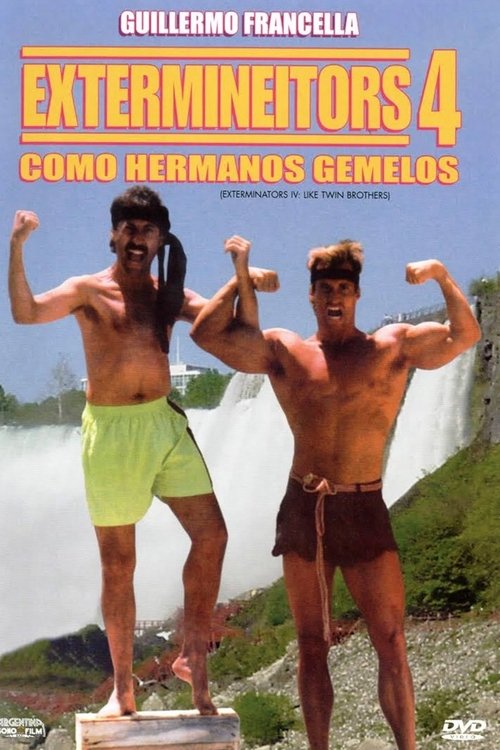
Extermineitors IV: As Twin Brothers
1992
No user ratings available yet
Representation score: 3.1 out of 10
Representation Score
Limited
1991
Director
Carlos Galettini
Runtime
85 minutes
Average Rating
No ratings yetNew Showbiz Analysis
Extermineitors III: The Final Fight is a product of its era, leaning heavily into the masculine-led hierarchies typical of 1990s action-comedies. The film's primary strength lies in its departure from Anglo-centric casting, utilizing Hispanic names and Spanish titling to ground the characters in a different cultural context. However, the film lacks depth in representing multiple aspects of identity. The narrative relies on traditional institutional values and sci-fi clichés, such as bionic augmentation, which fail to provide meaningful representation for disability or LGBTQ+ identities. The focus remains on military command and conventional heroics.
Category Breakdown
The film does not include any non-binary or LGBTQ+ identities and there is no depiction of same-sex intimacy. The plot revolves around military-related action and experiments with bionic technology.
The story centers on a male-dominated hierarchy within Eagle Command. Although Colonel Morris holds a leadership position, the plot heavily relies on masculine action clichés.
Spanish-language titling and names like Guillermo and Héctor Echavarria suggest a Hispanic cultural context. This provides a moderate departure from the typical Anglo-centric action models of the time.
The narrative follows conventional Western action clichés, emphasizing duty and institutional order. It focuses on a protagonist/antagonist dichotomy rather than critiquing systemic structures.
Bionic implants are used as science-fiction spectacle rather than nuanced portrayals of lived disability. Characters lack real control or influence related to neurodivergence or physical impairment beyond technological augmentation.
Present on Screen
Limited or Absent
Official Synopsis
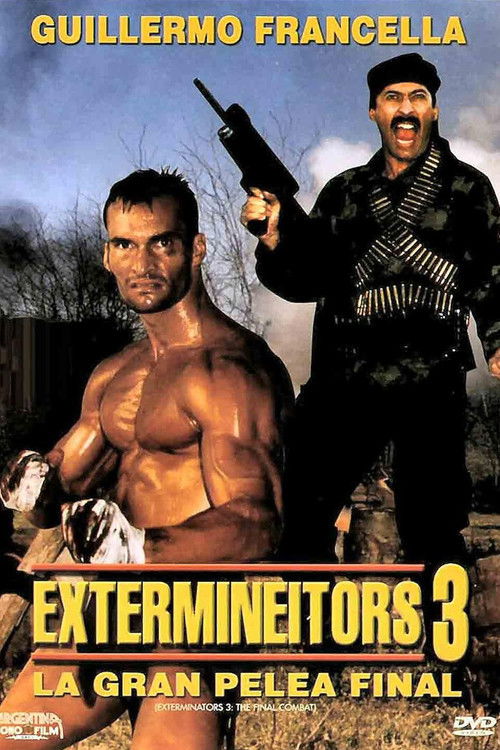
This time, the "exterminators" must confront a secret organization conducting a diabolical experiment: transforming a fighter into an indestructible man through a series of bionic implants. To investigate their scheme, Colonel Morris assigns Guillermo and Héctor Echavarria, but they are joined by Nico, an orphaned boy eager to become part of the Eagle Command.
1992

1993

1989

1994
1989
1985
1990
2018
No reviews yet. Be the first to share your thoughts on this movie!
Use the rating form above to leave a star rating and optional review.