Find another title
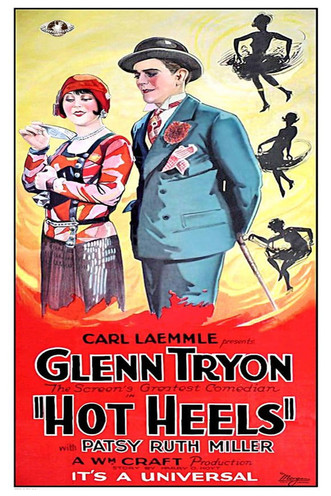
Hot Heels
1927
PassedDirector
William James Craft
Runtime
60 minutes
Average Rating
No ratings yetSynopsis
Glenn Higgins and Patsy Jones are a song-and-dance team traveling the vaudeville circuit across the United States, and land in a Kentucky tank-town filled with sharpies and wise-guys , wearing spats and carrying canes, who have reasons for wanting a horse named "Hot Heels, not to win the race he is scheduled to run in. This does not bode well for the vaudevillians as Glenn, acting on a hot tip from a hot vamp, has bet the pair's bankroll on "Hot Heels" to win.
Where to Watch
Diversity & Representation
Overall Score
Limited
Category Breakdown
LGBTQ+ Representation
The film centers on a traditional romantic pairing between Glenn Higgins and Patsy Jones. There is no indication of non-cisnormative identities or narratives that challenge heteronormativity.
Gender Representation
Patsy Jones possesses professional agency as part of a song-and-dance team. However, the plot relies on traditional archetypes like the male protagonist and the femme fatale.
Racial & Ethnic Diversity
The narrative likely reflects the homogeneous casting norms of 1927. There is no specific mention of non-white protagonists or diverse ensembles within the traveling vaudeville circuit.
Religious & Cultural Diversity
The story utilizes classic Western tropes, including gambling and the underworld. It reinforces traditional social structures rather than offering a critique of Western institutions.
Disability Representation
There are no visible or invisible disabilities mentioned or depicted in the character descriptions.
Strengths
- Patsy Jones demonstrates professional agency as a member of a traveling song-and-dance team.
Areas for Improvement
- The narrative relies on traditional gendered archetypes, such as the femme fatale.
- The film lacks representation of non-white protagonists or diverse ensembles.
- There is no evidence of non-cisnormative identities or LGBTQ+ narratives.
AI Analysis
Hot Heels is a standard genre piece from the late silent era that adheres to the established social and narrative conventions of 1927. It prioritizes traditional romantic and professional archetypes without disrupting prevailing cultural or gender hierarchies. The film relies heavily on period-typical tropes, such as the traveling performer and the gambling underworld. These elements lean into the escapism and moral simplicity characteristic of silent-era comedies. Ultimately, the work functions as a conventional action-comedy, lacking significant disruption of the era's social norms or diverse representation.
Rate this Movie
Reviews
No reviews yet. Be the first to share your thoughts on this movie!
Use the rating form above to leave a star rating and optional review.