Find another title
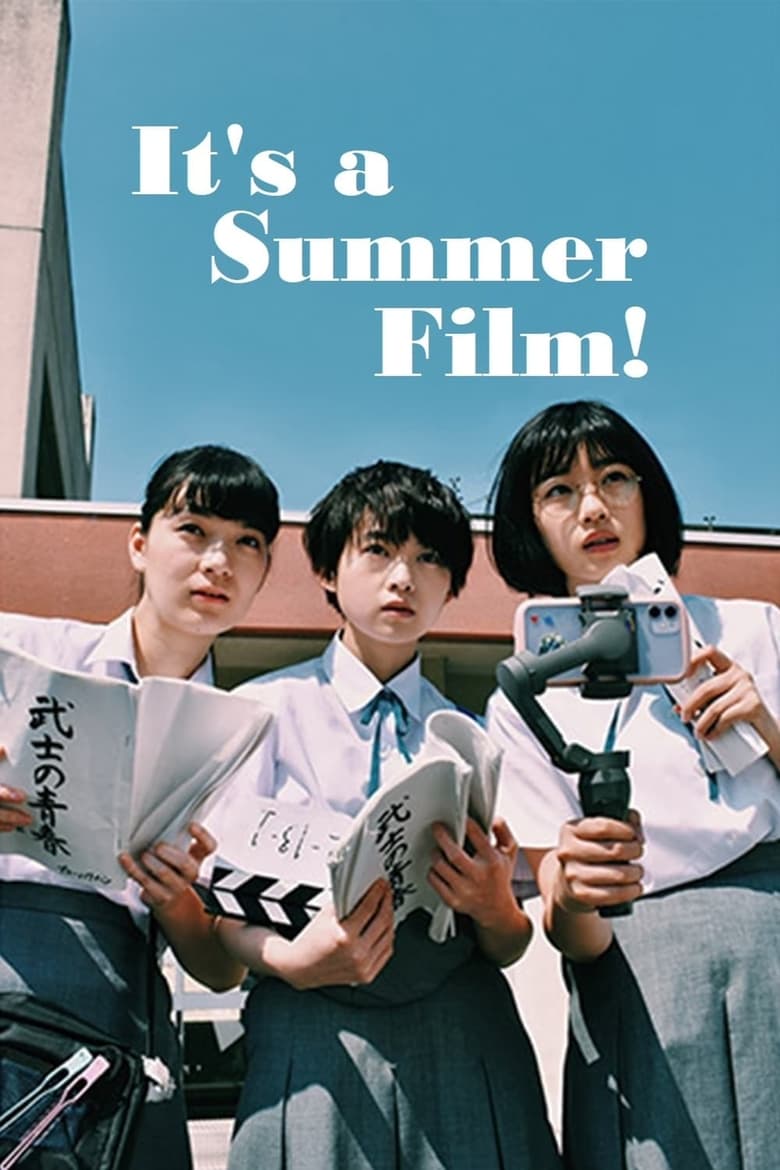
It's a Summer Film!
2021
Director
Soushi Matsumoto
Runtime
98 minutes
Average Rating
No ratings yetSynopsis
Barefoot and her friends decide to make a samurai movie, gather a unique cast and staff for the production, and try to screen it at their school festival.
Where to Watch
Diversity & Representation
Overall Score
Fair
Category Breakdown
LGBTQ+ Representation
The film's romance genre designation hints at potential for non-traditional relationship dynamics. However, there is no confirmed evidence of queer identities or critiques of heteronormativity.
Gender Representation
The story centers on a female protagonist named Barefoot and her friends. This female-led creative endeavor disrupts traditional male-dominated cinematic hierarchies by granting women agency.
Racial & Ethnic Diversity
As a Japanese production, the cast likely reflects the demographic homogeneity of its local setting. There is no explicit signal of a departure from traditional ethnic casting patterns.
Religious & Cultural Diversity
The film recontextualizes the traditional samurai genre through a modern, youth-driven lens. This creates a dialogue between historical Japanese identity and contemporary student perspectives.
Disability Representation
There is no documented evidence regarding the inclusion of characters with visible or invisible disabilities in this production.
Strengths
- The film promotes female-led creative autonomy by centering on a female protagonist and her production team.
- It subverts traditional cinematic hierarchies by giving students agency over the filmmaking process.
- The narrative offers a fresh, modern dialogue with traditional Japanese samurai culture.
Areas for Improvement
- The production lacks explicit evidence of diverse racial or ethnic casting beyond local demographics.
- There is no clear representation of characters with visible or invisible disabilities.
- The film does not yet demonstrate a clear presence of LGBTQ+ identities or non-cisnormative dynamics.
AI Analysis
It's a Summer Film! functions as a character-centric exploration of creative agency. By focusing on the 'making-of' process, the film places the tools of production in the hands of students, challenging institutional hierarchies. The narrative's strength lies in its potential to subvert power structures through female-led autonomy. It moves away from large-scale commercial tropes to prioritize personal, character-driven storytelling within the independent Japanese cinema circuit. However, the film lacks evidence of high-level intersectional complexity or radical systemic critique. The representation remains tied to the specific creative roles chosen by the protagonists within a likely homogeneous setting.
Rate this Movie
Reviews
No reviews yet. Be the first to share your thoughts on this movie!
Use the rating form above to leave a star rating and optional review.