
Gramps Is a Great Guy!
1987
No user ratings available yet
Representation score: 3.3 out of 10
Representation Score
Fair
1983
PGDirector
Bryan Forbes
Runtime
89 minutes
Average Rating
No ratings yetNew Showbiz Analysis
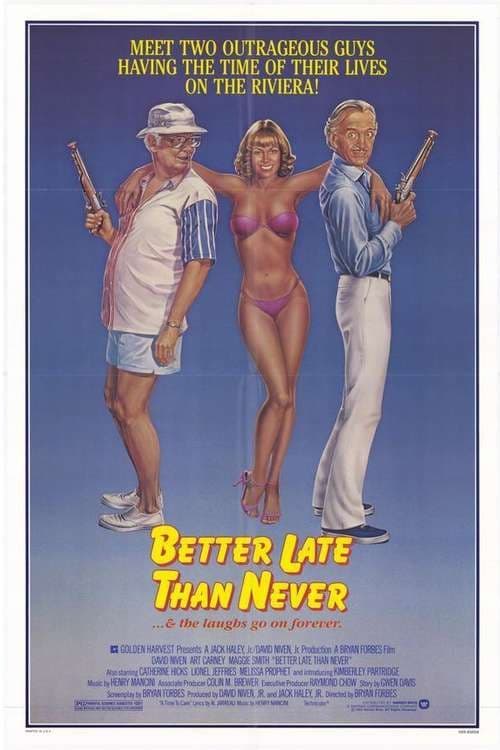
Better Late Than Never is a character-driven comedy that emphasizes reclaiming control in later life. While it offers a sympathetic view of the elderly, it stays within the traditional social frameworks of its time. The film lacks complexity in representing multiple aspects of identity, sticking closely to demographic norms and established hierarchies. It serves more as a reflection of British society during that era than a work challenging those norms. The narrative focuses on the human condition through a conventional lens, offering limited representation for LGBTQ+ individuals, diverse racial groups, or non-traditional disability identities.
Category Breakdown
The film follows the social norms of the early 1980s and does not include any queer subtext or non-straight identities.
Gender dynamics follow traditional 1980s comedic clichés. Women do not have roles with superior influence, and the film upholds established gender hierarchies.
The cast is mostly white and reflects the demographics of 1983 Britain. It lacks intentional racial diversity and characters with high ability to act.
The story looks at lighthearted rebellion against institutional rules in a care facility. It focuses on personal joy rather than systemic critiques or anti-capitalist themes.
Characters deal with physical frailty and aging with a sense of independence. The focus is on aging rather than neurological differences.
Present on Screen
Limited or Absent
Official Synopsis
Two men show up claiming to be the grandfather of a child heiress.
1987

1983

1966
1994
1938

1988

2019

1973
No reviews yet. Be the first to share your thoughts on this movie!
Use the rating form above to leave a star rating and optional review.