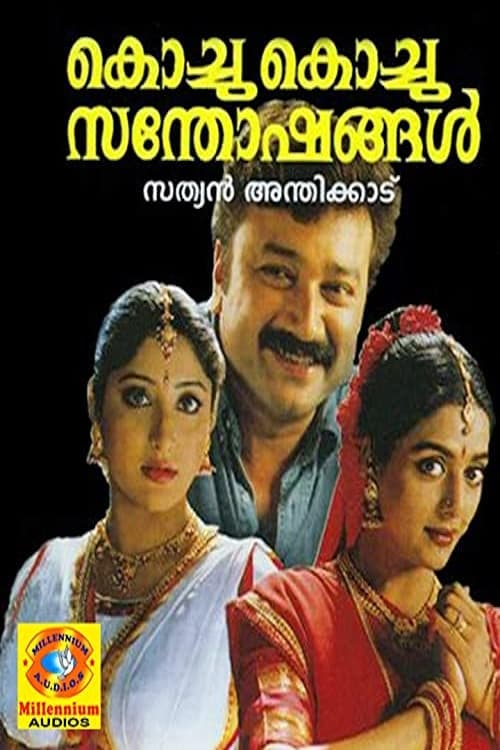
Kochu Kochu Santhoshangal
2000
No user ratings available yet
Representation score: 1.2 out of 10

Representation Score
Fair
2011
Director
Sathyan Anthikad
Runtime
155 minutes
Average Rating
No ratings yetNew Showbiz Analysis
Snehaveedu is a traditional domestic drama centered on familial stability and kinship. The story follows a man returning home and the complications surrounding a child's claim of paternity. While the film provides a culturally specific, non-Western perspective, it remains firmly grounded in conventional social frameworks. It lacks the broader diversity and multi-layered markers needed for a higher diversity rating.
Category Breakdown
The film does not include any representation of LGBTQ+ identities or non-cisgender narratives. The story revolves around traditional family relationships and parental claims.
Women, especially the mother, play key roles in the story. They have significant influence within traditional domestic settings.
Set in India, the film offers a non-Western perspective. However, it focuses on a specific social class, limiting broader diversity.
The story centers on the family as a core institution. It addresses disruptions to family unity but does not challenge broader social structures.
There is no depiction of characters with physical disabilities or neurodivergence in the story.
Present on Screen
Limited or Absent
Official Synopsis
Ajayan is back home after a long time away and he is hoping to be with his mother for the rest of his life, but things go wrong when a young boy claims to be his son.
2000

2014

2022

2020

2015

1992

2012

2008
No reviews yet. Be the first to share your thoughts on this movie!
Use the rating form above to leave a star rating and optional review.