Find another title
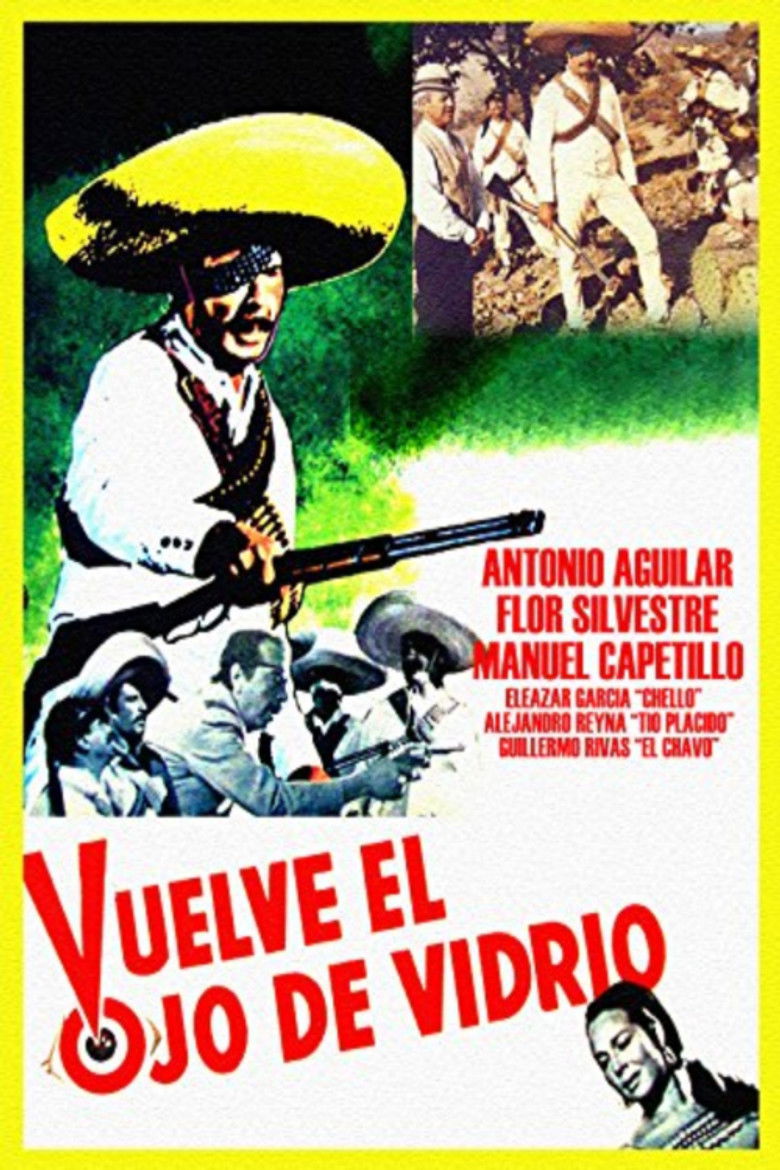
Vuelve el ojo de vidrio
1970
Director
René Cardona Jr., Fernando Durán Rojas
Runtime
105 minutes
Average Rating
No ratings yetSynopsis
Upon hearing the news of Madero's death, Porfirio Alcalá and his four cousins interrupt their peaceful lives as farmers to again join the Mexican Revolution.
Where to Watch
Diversity & Representation
Overall Score
Fair
Category Breakdown
LGBTQ+ Representation
The film lacks any evidence of non-cisnormative identities or same-sex intimacy. The narrative focuses on traditional familial bonds and the revolutionary struggle.
Gender Representation
The story is driven by a male-centric cohort of cousins. It follows conventional masculine leadership tropes without showing female characters with high agency.
Racial & Ethnic Diversity
As a Mexican production, the film features a non-Anglo-Saxon majority. It depicts local farmers reclaiming political power within a regional context.
Religious & Cultural Diversity
The film explores the friction between agrarian life and political upheaval. It engages with anti-establishment themes through the lens of the Mexican Revolution.
Disability Representation
There is no information regarding the depiction of physical or neurodivergent characters in this work.
Strengths
- Provides inherent ethnic authenticity through its Mexican production and historical setting.
- Explores themes of anti-establishment sentiment and agrarian political struggle.
Areas for Improvement
- Lacks female agency and representation within the revolutionary narrative.
- Does not include non-cisnormative identities or LGBTQ+ perspectives.
- Relies heavily on conventional masculine leadership tropes.
AI Analysis
Vuelve el ojo de vidrio is a period action-comedy that prioritizes historical genre tropes over modern intersectional representation. The narrative centers on a group of male farmers transitioning into revolutionary actors, which reinforces traditional masculine archetypes. While the film provides inherent ethnic authenticity by virtue of its Mexican setting and focus on local citizens, it lacks diversity in gender and LGBTQ+ categories. The story adheres to the heteronormative and patriarchal social structures typical of 1970s cinema. Ultimately, the film functions as a standard historical drama. It captures the spirit of the Mexican Revolution through class-based mobilization but does not attempt to deconstruct social hierarchies or expand its character spectrum.
Rate this Movie
Reviews
No reviews yet. Be the first to share your thoughts on this movie!
Use the rating form above to leave a star rating and optional review.