Find another title
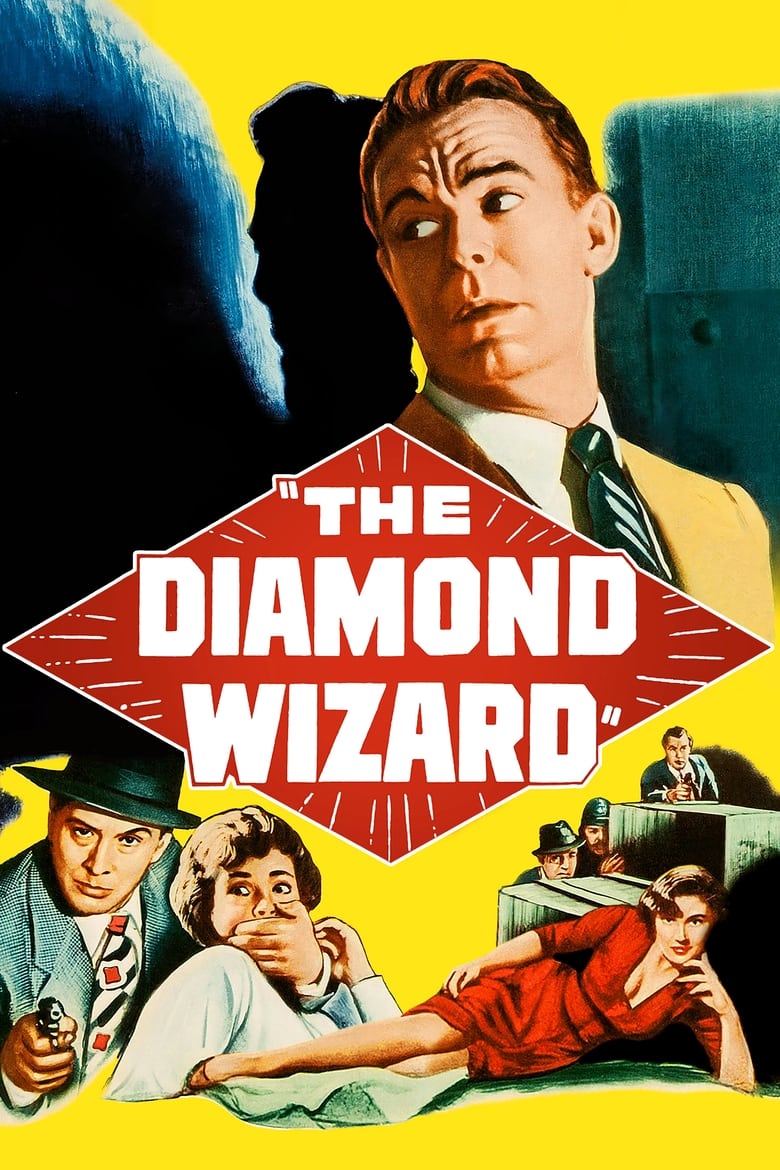
The Diamond Wizard
1954
NRDirector
Dennis O'Keefe, Montgomery Tully
Runtime
83 minutes
Average Rating
No ratings yetSynopsis
While in London trying to nab several fugitives who stole a million dollars from a U.S. Treasury vault, American federal agent Dennison (Dennis O'Keefe) assists Scotland Yard Insp. McClaren (Philip Friend) in his search for a missing atomic scientist (Paul Hardtmuth). The detective duo discovers that the key to solving both cases may rest with the scientist's daughter (Margaret Sheridan) and her fascinating diamond.
Where to Watch
Diversity & Representation
Overall Score
Limited
Category Breakdown
LGBTQ+ Representation
The film lacks LGBTQ+ characters or narratives that challenge heteronormative structures. The story focuses entirely on a standard detective procedural.
Gender Representation
Male protagonists drive the plot through their roles in law enforcement. While the scientist's daughter is central to the mystery, her agency is tied to her father and a physical object.
Racial & Ethnic Diversity
The cast appears to reflect a homogeneous Anglo-Saxon demographic typical of 1950s crime films. There is no evidence of non-white characters holding significant roles.
Religious & Cultural Diversity
The narrative reinforces Western institutionalism and the stability of state structures like Scotland Yard. It lacks any critique of these established legal and national security frameworks.
Disability Representation
There is no mention of characters with visible or invisible disabilities within the narrative.
Strengths
- The film provides a clear, structured detective procedural centered on international law enforcement cooperation.
Areas for Improvement
- The narrative lacks gender agency for female characters, who primarily serve as plot facilitators.
- There is a notable absence of racial and ethnic diversity within the cast and setting.
- The story fails to include any LGBTQ+ representation or non-heteronormative perspectives.
- The film lacks any exploration of disability or diverse cultural viewpoints.
AI Analysis
The film is a conventional mid-century crime thriller that adheres strictly to the social and narrative norms of its era. It prioritizes traditional hierarchies, centering the plot on male law enforcement figures and Western institutional authority. Representation is limited by a lack of diversity in race, gender agency, and sexual orientation. The story functions as a standard procedural that upholds the efficacy of state and legal structures rather than questioning them. Ultimately, the film lacks the intersectional complexity or social disruption necessary to move beyond a low diversity score, serving instead as a product of traditional 1950s storytelling.
Rate this Movie
Reviews
No reviews yet. Be the first to share your thoughts on this movie!
Use the rating form above to leave a star rating and optional review.