Blame!
2017
No user ratings available yet
Representation score: 4.7 out of 10
Representation Score
Fair
2017
TV-14Director
Hiroyuki Seshita
Runtime
106 minutes
Average Rating
No ratings yetNew Showbiz Analysis
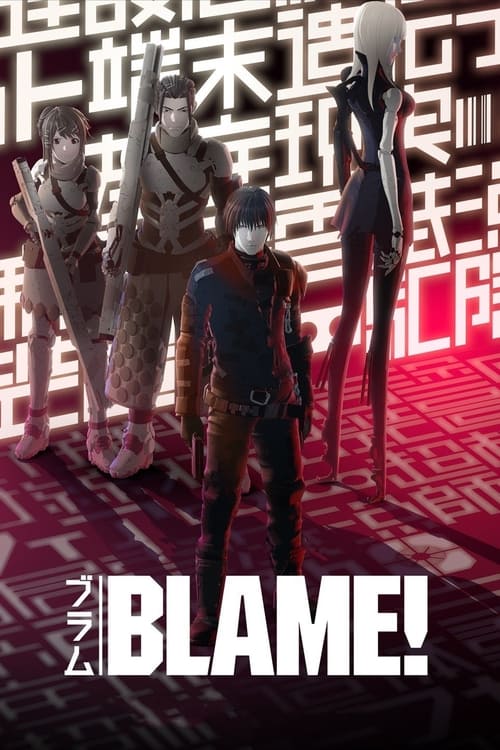
BLAME! offers a unique, postmodern perspective on diversity by stripping away traditional social identities in favor of a post-human aesthetic. The film's strength lies in its rejection of Western institutional norms and centralized authority, presenting a world where human structures no longer exist. However, the film struggles with conventional representation. It relies on male-coded protagonists and uses physical augmentations as mere plot devices rather than meaningful character studies. The extreme isolation of the setting also precludes the development of diverse social or romantic identities. Ultimately, the work is more successful at deconstructing societal systems than it is at providing explicit, progressive representation for specific identity groups.
Category Breakdown
The film doesn't include any explicit LGBTQ+ identities or romantic subplots. This absence is due to a setting focused solely on survival, where characters don't engage with interpersonal social structures.
The story follows a typical science fiction framework centered around a male-coded main character. Female characters like Zuru play important roles as catalysts or combatants in the high-stakes action.
Traditional ethnic markers are largely irrelevant in this post-human world. Identity is defined by mechanical or biological status rather than heritage, creating an unintentional color-blind aesthetic.
The film excels at showing the collapse of human institutions and the irrelevance of governance and religion. It presents a world where these systems have been replaced by an indifferent, automated system.
Physical augmentations and mechanical replacements are treated as standard genre clichés. These elements are used as tools for survival rather than as nuanced explorations of lived experience or neurodivergence.
Present on Screen
Limited or Absent
Official Synopsis
In the distant technological future, civilization has reached its ultimate Net-based form. An "infection" in the past caused the automated systems to spiral out of order, resulting in a multi-leveled city structure that replicates itself infinitely in all directions. Now humanity has lost access to the city's controls, and is hunted down and purged by the defense system known as the Safeguard. In a tiny corner of the city, a little enclave known as the Electro-Fishers is facing eventual extinction, trapped between the threat of the Safeguard and dwindling food supplies. A girl named Zuru goes on a journey to find food for her village, only to inadvertently cause doom when an observation tower senses her and summons a Safeguard pack to eliminate the threat. With her companions dead and all escape routes blocked, the only thing that can save her now is the sudden arrival of Killy the Wanderer, on his quest for the Net Terminal Genes, the key to restoring order to the world.
2017

2015

2015

2009

2017

2011

2021
2022
No reviews yet. Be the first to share your thoughts on this movie!
Use the rating form above to leave a star rating and optional review.