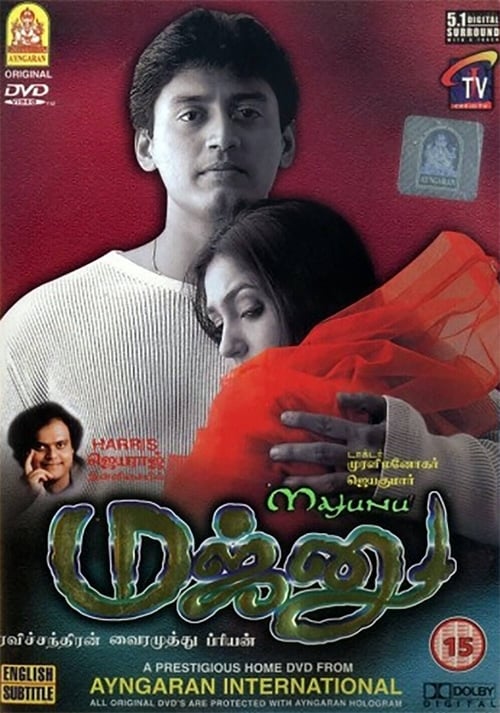
Majunu
2001
No user ratings available yet
Representation score: 2.7 out of 10

Representation Score
Minimal
1999
Not RatedDirector
Saran
Runtime
157 minutes
Average Rating
No ratings yetNew Showbiz Analysis
Amarkalam is a quintessential product of late-90s commercial South Indian cinema, prioritizing established social hierarchies and conventional gender roles. The narrative is driven by traditional clichés of honor and romantic devotion rather than social critique. While the film offers an authentic cultural snapshot of its specific regional setting, it lacks engagement with diverse identities. The story reinforces existing familial and patriarchal frameworks instead of challenging them. Ultimately, the film functions as a standard action-romance that relies on a straight-centered and culturally homogeneous lens to drive its plot.
Category Breakdown
The film strictly follows conventions that assume everyone is straight or cisgender. The central conflict and resolution hinge on a traditional romantic bond between the male protagonist and the female lead.
Vasu serves as the main driver of action and plot progression. While Mohana has emotional depth, her role primarily supports the romantic framework.
The cast is culturally uniform, fitting the film's South Asian setting. It provides an authentic representation of its demographic without active ethnic diversification.
The plot emphasizes traditional social standing and patriarchal reputation through familiar moral clichés. It operates within a standard moral framework typical of commercial melodrama.
There is no representation of physical, sensory, or neurodivergent disabilities. Characters have standard physical capabilities needed for the action genre.
Present on Screen
Limited or Absent
Official Synopsis
Vasu is a tough street crook who lives at a movie theater. One day while transporting the reels of a new film, he clashes with a music student Mohana. Mohana is the daughter of the Police Commissioner, who Tulsidas an ex-gang leader released from jail has an old grudge against. He tells Vasu to kidnap Mohana for two days in order to ruin the family's honor. While being held captive by Vasu, Mohana falls in love with him after hearing him sing. Vasu rejects her love, but on learning of it, Tulsidas pays him to pretend to be in love with her. By the time Tulsidas learns that his enmity with the police commissioner is false and tells Vasu to stay away from Mohana it is too late, Vasu's love has become real.
2001

2011

2010

2007

1994

2002

2003

2002
No reviews yet. Be the first to share your thoughts on this movie!
Use the rating form above to leave a star rating and optional review.