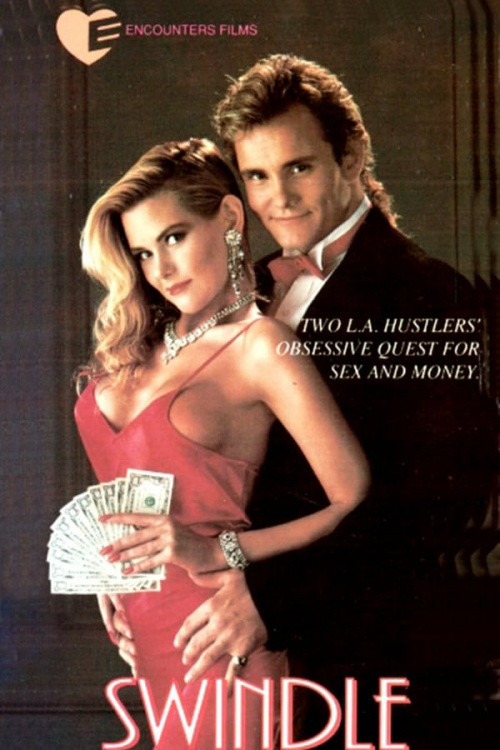
The Swindle
1991
No user ratings available yet
Representation score: 2.3 out of 10

Representation Score
Limited
1996
RDirector
Marcus DeLeon
Runtime
98 minutes
Average Rating
No ratings yetNew Showbiz Analysis
The film opens on Tanya Mulhill, a bartender in a dimly lit bar, her face framed by the soft glow of neon and the clink of glasses. This image sells a noirish intimacy, but it withholds the real story: the economic squeeze that binds her to a husband who controls the family’s finances. The camera lingers on Tanya, treating her as the moral and emotional center, while the men orbit her decisions. Henry, a former ballplayer, refuses to share the insurance settlement, claiming with newfound piety that money is the root of all evil. This piety is not a spiritual awakening but a tool of control, a way to maintain his authority over Tanya’s life. The film’s argument is that traditional male authority, when wrapped in religious language, becomes a cage. Tanya’s decision to enlist Benny, a hapless grifter, to concoct a scheme to get her fair share, is a rejection of this cage. The camera loves Tanya’s agency, her ability to navigate the ambiguity of her choices. The men, on the other hand, are reactive, defined by their relationships to her. Jesse, a handsome, sympathetic figure, is caught in the same web of economic pressure, his incompetence a tragic condition rather than a joke. The ending is a quiet, ambiguous domestic moment, rejecting a violent or explosive climax. The “squeeze” is emotional and economic, not physical. Tanya’s victory is not a dramatic triumph but a slow, inevitable process of reclaiming her life. The film’s values settle on Tanya’s agency, her ability to navigate the ambiguity of her choices. The last image is a moral verdict: the woman who navigates the ambiguity of intimacy is the winner.
Category Breakdown
Absent. All depicted relationships are heterosexual; no same-sex intimacy or queer identity appears on screen.
Tanya is the active moral center, enlisting Benny to secure financial independence. Henry’s authority collapses when he invokes piety to withhold the settlement. The camera favors Tanya’s agency, while the men remain reactive to her decisions.
The cast is predominantly white, with Bert Santos providing a minor Latino presence as Manny. Non-white characters lack narrative depth or power, serving as background texture in a white-centric economic drama.
The film critiques religious piety used to justify financial control, as Henry’s “newfound piety” blocks Tanya’s fair share. The Catholic mission’s decay mirrors institutional instability, framing earned wealth as a basic necessity rather than a moral failing.
Absent. Henry’s past injury is a plot device for his unemployment but is not depicted as an ongoing disabled life or identity.
Present on Screen
Limited or Absent
Official Synopsis
Benny, a hapless grifter, is thrown off a train after cheating at cards, and into the life of Tanya, a lovely bartender. Tanya has been supporting her husband, a former ballplayer, since his accident, waiting for an insurance settlement that will solve all their financial woes. But when it comes, he refuses to share it with her, claiming with newfound piety that money is the root of all evil. She then enlists the help of Benny to concoct a scheme to get her fair share of the settlement, and he finds one: a local Catholic mission needs money for repairs and Benny decides to create a miracle that will encourage husband Henry to fork over the money - which Benny and Tanya will intercept and share.
1991

2009
1999
2008

2020

1993
2004

2004
No reviews yet. Be the first to share your thoughts on this movie!
Use the rating form above to leave a star rating and optional review.