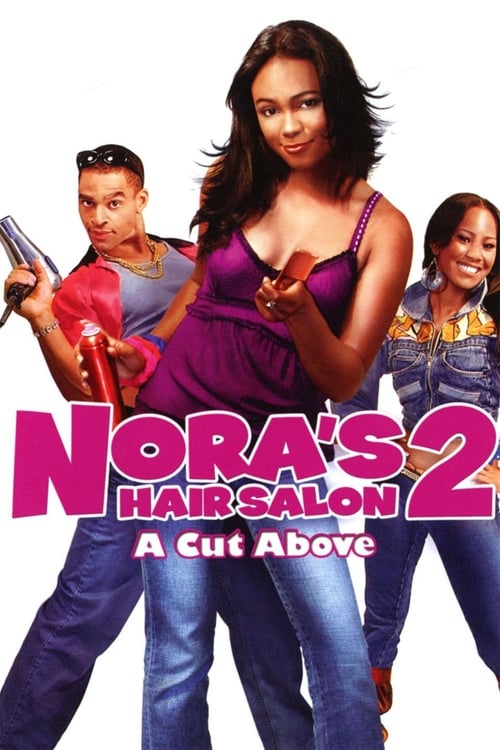
Nora's Hair Salon II: A Cut Above
2008
No user ratings available yet
Representation score: 8.1 out of 10
Representation Score
Good
2011
PG-13Director
Rico Johnson
Runtime
84 minutes
Average Rating
No ratings yetNew Showbiz Analysis
The film centers a Black female salon crew navigating a professional crisis. The narrative treats the salon as a surrogate family, emphasizing collective competence and economic resilience. Men are peripheral, appearing mainly as the external force that disrupts the women’s stability. The cast is predominantly Black, with women holding the narrative power. The story avoids traditional gender roles, framing female solidarity as the primary source of strength. There is no focus on faith, patriotism, or disability. The tone is light, focusing on the dignity of small business and community bonds. LGBTQ+ representation and disability are absent from the cast and plot. The ensemble reflects the salon’s community without tokenism. The narrative focuses on economic survival and professional competence rather than identity politics.
Category Breakdown
No same-sex romance or openly LGBTQ+ characters appear in the cast or synopsis. The salon crew interacts within standard professional and personal boundaries without identifying gender or sexual orientation.
Women drive the plot as the salon’s core staff and decision-makers. Men are limited to the producer Charles, who initiates the conflict; the women resolve the crisis through collective competence rather than male guidance.
The cast is predominantly Black, with Anika C. McFall, Laila Odom, and others holding central roles. Miguel A. Núñez Jr. appears as the male producer. The ensemble reflects the salon’s community without tokenism or historical recasting.
The salon functions as a surrogate family, prioritizing female bonds over traditional nuclear structures. Economic survival and small-business dignity are central themes. Faith and patriotism are absent; the focus is on community resilience and professional pride.
No characters are depicted with ongoing physical or cognitive disabilities. The "disaster" is a professional or situational crisis, not a medical condition or disability-related plot point.
Present on Screen
Limited or Absent
Official Synopsis
Reality show producer Charles proposes that Nora's Hair Salon have its own show; immediately, the salon crew signs on with hopes of money and fame.
2008

2011
2002
2015

2020

2009
1999
2004
No reviews yet. Be the first to share your thoughts on this movie!
Use the rating form above to leave a star rating and optional review.