Project Nightmare
1987
No user ratings available yet
Representation score: 1.8 out of 10
Representation Score
Minimal
1970
GPDirector
Robert F. Slatzer
Runtime
84 minutes
Average Rating
No ratings yetNew Showbiz Analysis
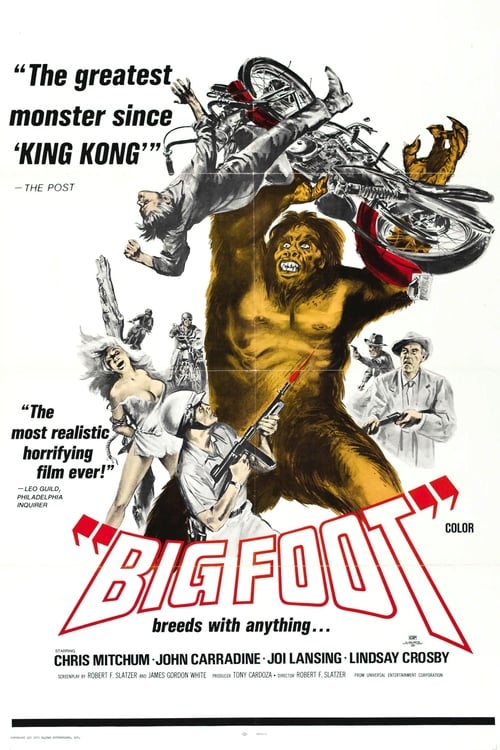
Bigfoot (1970) is a typical genre film that upholds traditional social hierarchies. The movie relies on established horror clichés where characters serve archetypal functions rather than exploring complex identities. The production emphasizes creature-feature formulas over nuanced narrative structures, failing to challenge prevailing cultural norms related to gender, race, or institutional authority.
Category Breakdown
The film focuses on traditional heterosexual relationships, such as between Rick and Chris. There is no representation of non-binary or LGBTQ+ identities.
Female characters like Joi Landis and Chris play crucial roles but are often sidelined as victims. They have limited influence over the plot, reinforcing traditional gender roles.
The cast is predominantly white and Anglo-Saxon. There is no indication of a diverse racial makeup or the use of actors from different ethnic backgrounds.
The film follows conventional Western storytelling structures and institutional authority. It adheres to a standard hero-versus-monster framework without challenging Western cultural norms.
There is no representation of characters with visible or invisible disabilities. The narrative does not integrate neurodivergent or physically impaired individuals.
Present on Screen
Limited or Absent
Official Synopsis
Bigfoot kidnaps some women and some bikers decide to go on a rescue mission to save them.
1987

1957
2011
1976
2005

2013

1985

2003
No reviews yet. Be the first to share your thoughts on this movie!
Use the rating form above to leave a star rating and optional review.