Find another title
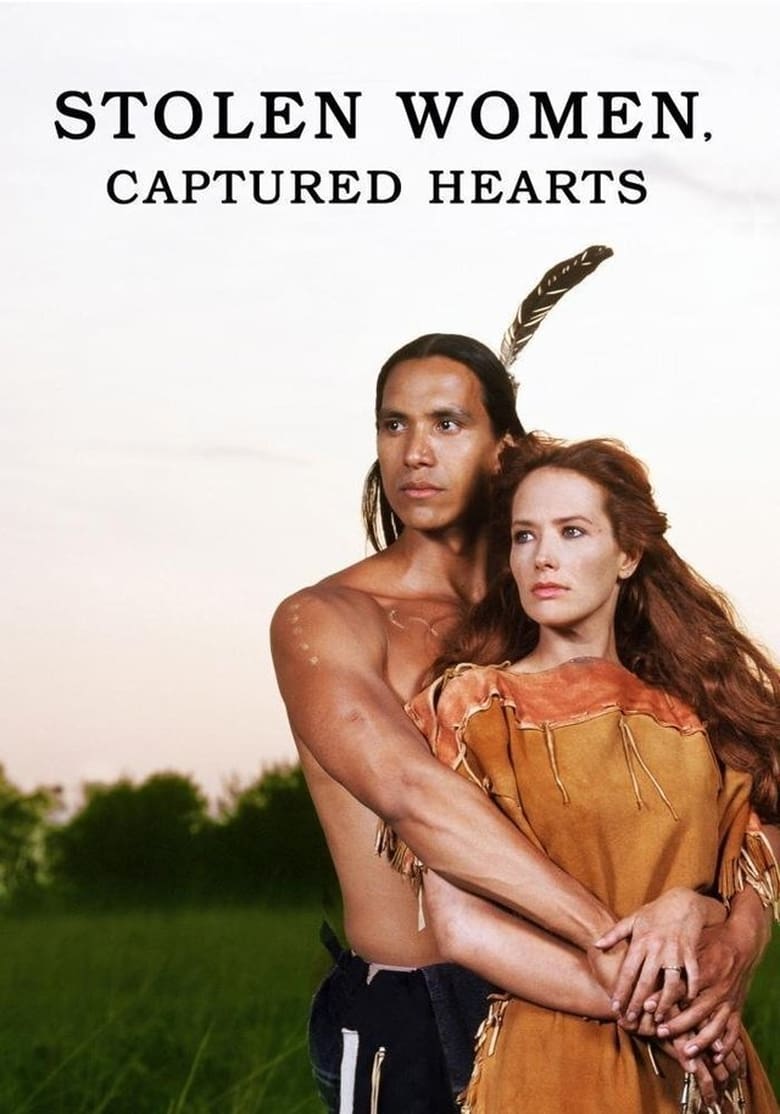
Stolen Women, Captured Hearts
1997
Director
Jerry London
Runtime
87 minutes
Average Rating
No ratings yetSynopsis
Kansas, 1868. A wagon train is attacked by a band of Lakota Sioux led by the young and athletic warrior Tokalah. The attractive, red haired Anna Brewster-Morgan and her friend Sarah White are on this wagon train too. When Tokalah noticed a terrified Anna with a Bible, he thinks this is an omen. Despite killing the other passengers of the wagon train, only Anna and Sarah may continue their voyage. The next day Anna and Sarah are kidnapped by Tokalah. At first terrified of her captors, the unhappily married Anna eventually falls in love with the noble, honorable Tokalah. After a year's captivity, Sarah is returned to her own people. Anna now must choose between her new life with Tokalah and her previous existence as the wife of farmer Daniel Morgan.
Where to Watch
Diversity & Representation
Overall Score
Limited
Category Breakdown
LGBTQ+ Representation
The film centers on a heteronormative romance between Anna and Tokalah. There is no presence of same-sex intimacy or non-cisnormative identities.
Gender Representation
Anna shows survival agency after the attack, but the story relies on damsel-in-distress tropes. The central conflict focuses on traditional feminine preoccupations with romantic and domestic stability.
Racial & Ethnic Diversity
The film features a binary dynamic between white settlers and the Lakota Sioux. While Tokalah is depicted as a noble and complex individual, the cast remains largely homogeneous.
Religious & Cultural Diversity
Religious symbols like the Bible serve as standard cultural markers rather than subjects of critique. The narrative prioritizes individual romantic choices over systemic or institutional interrogation.
Disability Representation
There are no visible or invisible disabilities portrayed with agency. No characters are defined by a disability within the narrative.
Strengths
- The portrayal of Tokalah as a noble and honorable character avoids the violent caricatures often found in traditional Westerns.
- The protagonist, Anna, demonstrates survival agency following the initial trauma of the wagon train attack.
Areas for Improvement
- The narrative relies heavily on the 'damsel in distress' trope and the romanticization of captivity.
- The film lacks engagement with systemic power dynamics or a critique of colonial expansion.
- There is a lack of representation for LGBTQ+ identities and diverse disability portrayals.
AI Analysis
Stolen Women, Captured Hearts is a conventional romantic Western that prioritizes character-driven drama over social critique. It avoids the violent caricatures of Indigenous people common in older Westerns by presenting Tokalah as a noble, honorable figure. However, the film remains tethered to traditional genre tropes. It focuses on the romanticization of captivity and individual emotional fulfillment rather than examining the systemic power dynamics or colonial expansion of the 1860s. Ultimately, the film functions as a standard period romance. It humanizes its central figures but does not attempt to subvert established social hierarchies or explore intersectional identities.
Rate this Movie
Reviews
No reviews yet. Be the first to share your thoughts on this movie!
Use the rating form above to leave a star rating and optional review.