Find another title
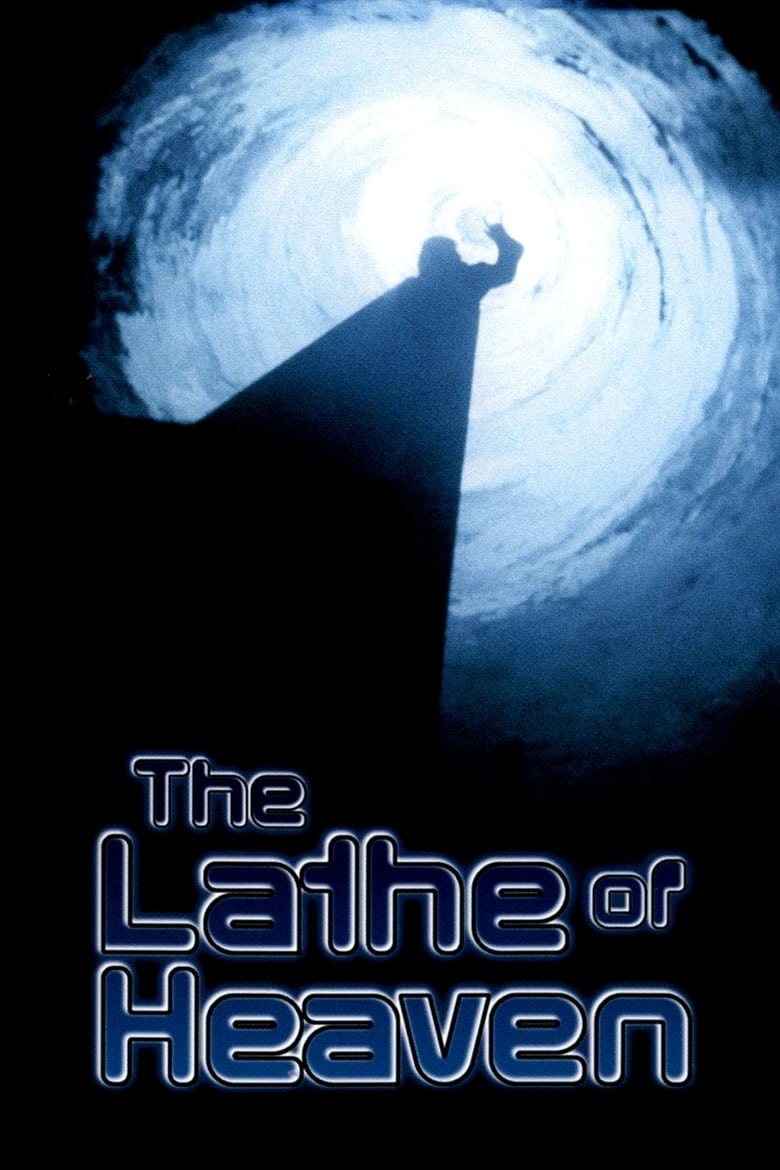
The Lathe of Heaven
1980
Director
Fred Barzyk, David R. Loxton
Runtime
104 minutes
Average Rating
No ratings yetSynopsis
George Orr, a man whose dreams can change waking reality, tries to suppress this unpredictable gift with drugs. Dr. Haber, an assigned psychiatrist, discovers the gift to be real and hypnotically induces Mr. Orr to change reality for the benefit of mankind --- with bizarre and frightening results.
Where to Watch
Diversity & Representation
Overall Score
Fair
Category Breakdown
LGBTQ+ Representation
The film lacks visible LGBTQ+ characters or depictions of non-cisnormative identities. The narrative focus remains strictly on the psychological tension between the two central male protagonists.
Gender Representation
The narrative is heavily centered on a masculine-coded power struggle. Female characters lack significant agency and remain secondary to the central conflict, with few women in positions of authority.
Racial & Ethnic Diversity
The production features a homogeneous social structure and lacks a diverse or non-Anglo-Saxon majority cast. There are no intentional efforts toward intersectional casting to expand the narrative scope.
Religious & Cultural Diversity
The film excels in its critique of institutional authority and social engineering. It offers a sophisticated narrative regarding the instability of objective truth and the dangers of forced utopias.
Disability Representation
George Orr’s reality-altering dreams serve as a central psychological condition. While his neurodivergent experience drives the plot, it functions more as a metaphysical tool than a nuanced exploration of disability.
Strengths
- Provides a sophisticated critique of institutional authority and social engineering.
- Offers deep intellectual engagement with postmodernist themes and moral relativism.
- Avoids 'inspiration porn' when depicting the protagonist's psychological condition.
Areas for Improvement
- Lacks visible LGBTQ+ characters or non-cisnormative identities.
- Fails to provide female characters with significant agency or narrative authority.
- Features a homogeneous cast lacking racial and ethnic diversity.
AI Analysis
The film is a deeply intellectual work that prioritizes philosophical complexity over demographic breadth. Its strength lies in its sophisticated critique of systemic control and the dangers of centralized authority. By deconstructing the impulse to impose order through force, the film achieves a high level of cultural and intellectual depth. However, this complexity is housed within a very narrow demographic framework. The cast lacks racial, gender, and LGBTQ+ diversity, focusing almost exclusively on a masculine-coded struggle between two men. This creates a significant imbalance between the film's progressive ideas and its limited representation of human identity. Ultimately, the film offers a profound exploration of postmodernist uncertainty, even as it fails to provide a diverse range of voices or identities within its social structure.
Rate this Movie
Reviews
No reviews yet. Be the first to share your thoughts on this movie!
Use the rating form above to leave a star rating and optional review.