Find another title
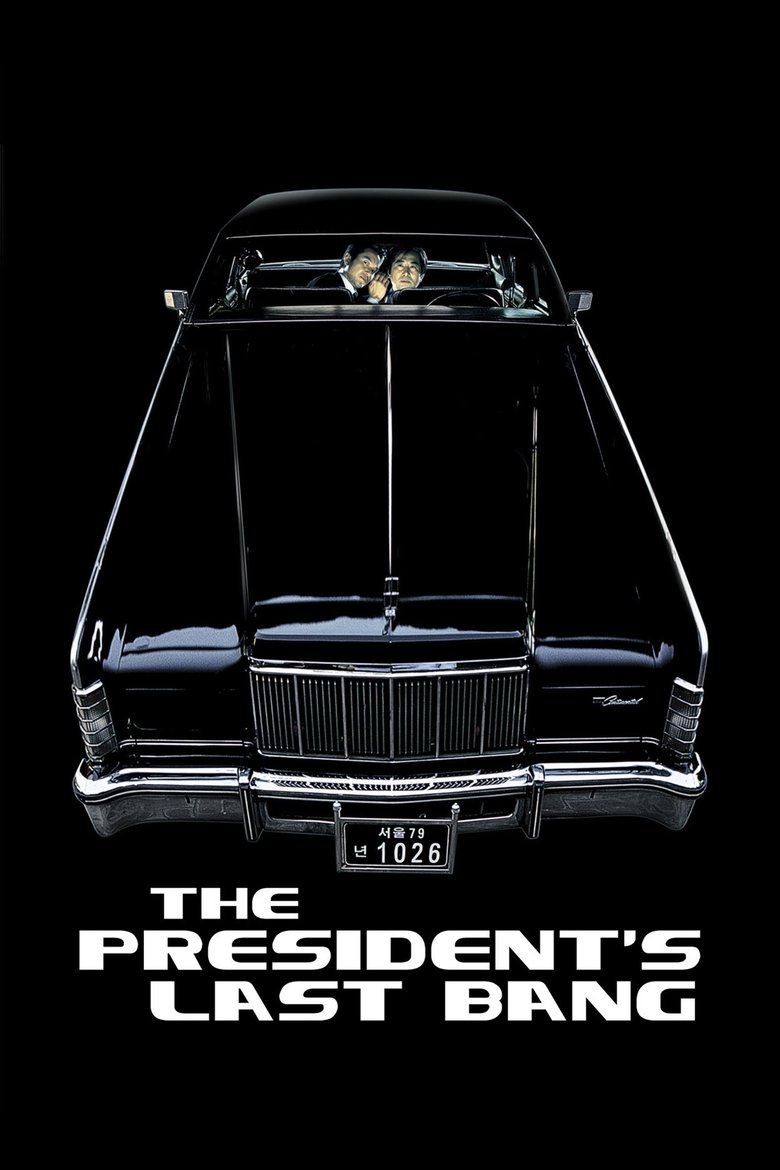
The President's Last Bang
2005
Director
Im Sang-soo
Runtime
102 minutes
Average Rating
No ratings yetSynopsis
On October 26, 1979, President Park Chung-hee, who had ruled South Korea since 1961, was assassinated by his director of intelligence. The film depicts the events of that night.
Where to Watch
Diversity & Representation
Overall Score
Limited
Category Breakdown
LGBTQ+ Representation
The film focuses entirely on the masculine-coded corridors of military and intelligence power. No non-cisnormative identities or queer narratives appear within this historical framework.
Gender Representation
The narrative centers on male military and intelligence officials, adhering to 1970s patriarchal hierarchies. Women are relegated to secondary or domestic roles, reinforcing traditional gendered divisions of power.
Racial & Ethnic Diversity
The cast is ethnically homogeneous, reflecting the specific historical and geographic context of the era. It functions as a localized study of the Korean political elite.
Religious & Cultural Diversity
The film excels by critiquing state-centric institutions and Western-aligned authoritarianism. It deconstructs official history, favoring a fragmented truth over national stability or traditional patriotism.
Disability Representation
There is no discernible focus on neurodivergence, physical disability, or chronic illness. Characters are defined by political utility rather than physical or mental diversity.
Strengths
- The film provides a powerful critique of centralized power and authoritarian institutions.
- It successfully deconstructs the 'official' historical narrative through a postmodern lens.
- The narrative architecture effectively mirrors the breakdown of institutional order.
Areas for Improvement
- The film lacks representation of LGBTQ+ identities and non-cisnormative narratives.
- Gender representation is limited, with women relegated to peripheral or domestic roles.
- There is no focus on neurodivergence or physical disability within the character arcs.
AI Analysis
Im Sang-soo’s film is a sophisticated political reconstruction that uses a fragmented narrative to deconstruct the mechanics of state power. It avoids traditional biopic tropes, instead offering a semiotic study of chaos during the 1979 assassination of Park Chung-hee. While the film lacks demographic breadth regarding gender, disability, and LGBTQ+ identities, it achieves high marks for its intellectual subversion of authority. It challenges the sanctity of political hierarchies by framing power transitions as systemic failures rather than structured evolutions. Ultimately, the work is a significant piece of political deconstruction. However, it remains tethered to the traditional gender and racial hierarchies inherent to its specific historical setting.
Rate this Movie
Reviews
No reviews yet. Be the first to share your thoughts on this movie!
Use the rating form above to leave a star rating and optional review.