
Campus Crush
2009
No user ratings available yet
Representation score: 4.7 out of 10
Representation Score
Good
2004
TV-MADirector
Robert Salis
Runtime
110 minutes
Average Rating
No ratings yetNew Showbiz Analysis
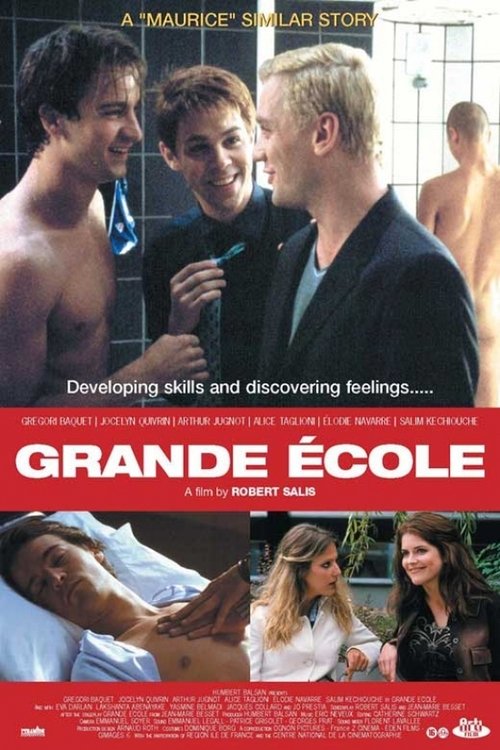
Grande école explores identity through the lens of social and sexual awakening. By focusing on Paul's developing queer attraction, the film makes identity exploration a key part of the narrative. The film also challenges class and gender hierarchies. Agnes's active role and Mecir's social insights provide important counterpoints to the sheltered academic setting. While the film successfully questions institutional elitism and traditional romantic roles, it does not include representations of physical or neurodivergent disabilities.
Category Breakdown
The film focuses on Paul's growing attraction to his roommate, Louis-Anault. This personal journey frames queer desire through competition rather than tragedy, making it a central part of the story.
Agnes avoids being portrayed as a passive 'scorned partner.' Instead, she takes control by initiating a wager that sets the terms of her relationship with Paul, showing her active negotiation of her romantic autonomy.
Mecir, an Arab worker, offers a critical perspective that challenges the uniformity of the elite college environment. His presence brings a unique viewpoint and social wisdom.
The film contrasts the insulated world of the 'Grande École' with the realities of working-class life. It questions the value of established social hierarchies and academic elitism.
There are no visible or mentioned depictions of physical or neurodivergent disabilities in the film.
Present on Screen
Limited or Absent
Official Synopsis
Paul and Agnes have been going out for quite a while and Agnes is shocked to learn that he'd rather live with two roommates on campus than move in with her. As soon as he meets one of his roommates, Louis-Anault, Paul's behavior changes - he is attracted to Louis without realizing so himself. Agnes, on the other hand, gets quite jealous and offers a bet: Whoever gets to have Louis-Anault first, wins... If she does, Paul will no longer explore his homosexual desires, if he does - she'll walk away. Meanwhile, Paul meets Mecir, a young Arab worker, who shows him there's more to life than elite colleges...
2009

2009

1996

1987

2009

1994

1999

1998
No reviews yet. Be the first to share your thoughts on this movie!
Use the rating form above to leave a star rating and optional review.