
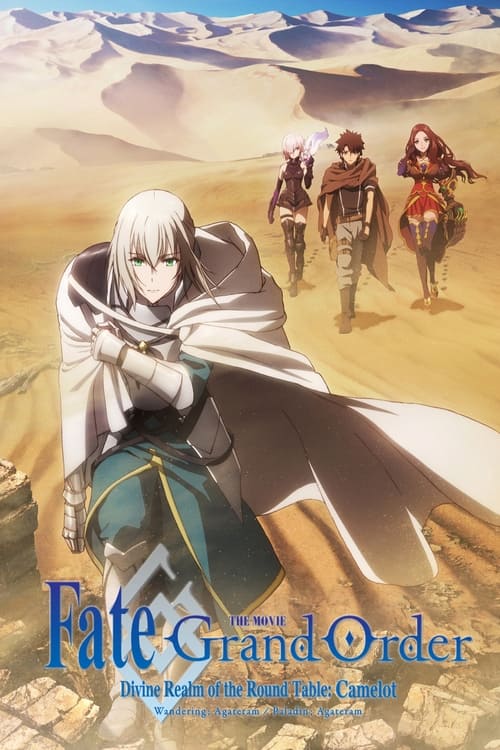
Fate/Grand Order the Movie: Divine Realm of the Round Table: Camelot 2 Paladin; Agateram
2021
No user ratings available yet
Representation score: 8.7 out of 10
Representation Score
Excellent
2020
Director
Kei Suezawa
Runtime
90 minutes
Average Rating
No ratings yetNew Showbiz Analysis
The film stands out by placing authoritative women at the center of its narrative, challenging traditional gender roles. It incorporates a wide range of global mythological figures, moving beyond a narrow Western perspective. However, the film lacks explicit representation of LGBTQ+ identities and does not address disability. Characters often feel more like archetypes than individuals facing physical or neurodivergent challenges. Overall, the film offers a sophisticated critique of authority, trading traditional storytelling for a postmodern exploration of power and culture.
Category Breakdown
The film highlights strong bonds between characters, suggesting a fluidity beyond traditional heterosexual relationships. However, it does not explicitly include same-sex intimacy or non-binary identities.
The film features powerful female characters like the Lion King and Mash Kyrielight, who command authority and martial prowess. These characters challenge the stereotype of submissive femininity.
The setting draws from non-Western mythologies, such as Ozymandias, presenting a diverse array of historical identities rather than a homogeneous Anglo-Saxon perspective.
The story critiques absolute rule by contrasting the pursuit of a perfect utopia with the ability to act of individuals. It questions the sanctity of centralized, totalitarian power.
Characters are portrayed as idealized, mythological figures without nuanced depictions of visible or invisible disabilities. They primarily serve as vessels for mythological ideals.
Present on Screen
Limited or Absent
Official Synopsis
The wandering knight, Bedivere, reaches the end of his journey. It is A.D. 1273 in Jerusalem. The Holy Land has been transformed into a massive desert and its people have been forced out of their homes as three major powers wage war with each other in this wasteland. The Knights of the Round Table come together to protect the Holy City and their Lion King. With the whole of his kingdom summoned into a strange land, Ozymandias, the Sun King, quietly plots against the tyranny of this bizarre realm. The mountain people, protectors of those who were stripped of their land, await their chance at rebellion. In order to fulfill his mission, Bedivere heads for the Holy City where the Lion King rules. There he meets humanity’s final Master, Ritsuka Fujimaru, who has come to Jerusalem, accompanied by his Demi-Servant, Mash Kyrielight, in their quest to restore human history.
2021
2020
2021

2017
2016

2023

2019
2018
No reviews yet. Be the first to share your thoughts on this movie!
Use the rating form above to leave a star rating and optional review.