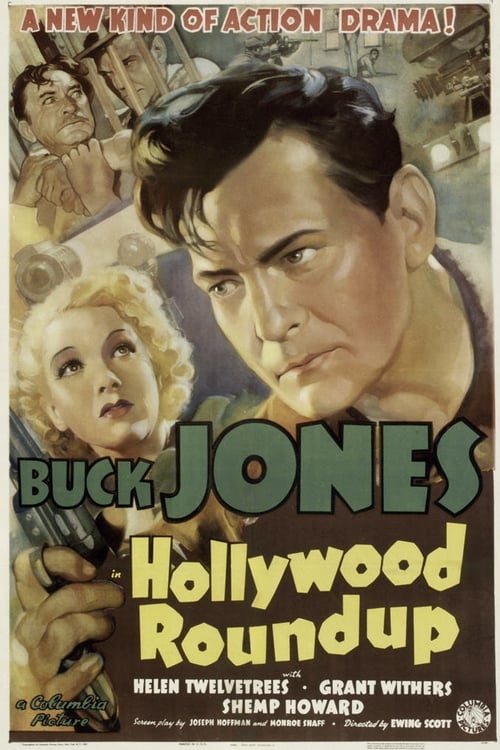
Hollywood Round-Up
1937
No user ratings available yet
Representation score: 1.3 out of 10
Representation Score
Minimal
1936
NRDirector
Mack V. Wright
Runtime
71 minutes
Average Rating
No ratings yetNew Showbiz Analysis
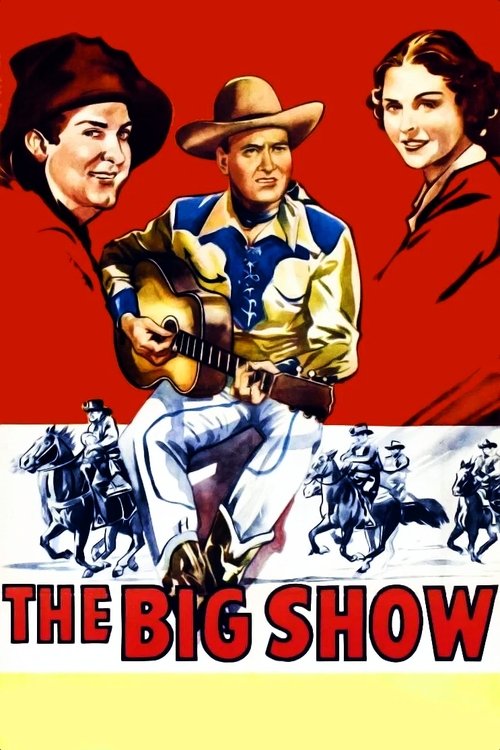
The Big Show is a quintessential 1930s genre piece that prioritizes established Western clichés over progressive character development. The plot revolves around male-centric conflicts, such as identity impersonation and criminal blackmail, which keep the focus on men's control over the story. While the film features female characters, they serve as plot devices to facilitate the central male drama. The social landscape remains traditional, reflecting the era's cinematic standards through a homogeneous lens. Ultimately, the film functions as a standard studio production of its time, reinforcing existing social hierarchies and conventional romantic structures without offering multi-layered depth.
Category Breakdown
The film follows a conventional romantic structure centered on a male protagonist and two female characters. It adheres to standard clichés that assume everyone is straight or cisgender without exploring diverse sexual orientations or gender identities.
Narrative ability to act is concentrated among male characters, including the protagonist, the star, and the antagonist. Women primarily function as catalysts for identity confusion rather than independent drivers of the plot.
Set during a Texas Centennial, the film likely reflects the homogeneous casting typical of 1930s Westerns. It prioritizes white protagonists within a standard frontier setting.
The story utilizes a traditional Western framework involving debt and blackmail. It reinforces the stability of the studio system rather than deconstructing social or economic institutions.
There is no evidence of characters with visible or invisible disabilities within the narrative.
Present on Screen
Limited or Absent
Official Synopsis
At the Texas Centennial in Dallas Autry confuses two girls by being himself and his own stunt double. When cowboy star Tom Ford disappears, Wilson gets his double Gene Autry to impersonate him. But Ford owes gangster Rico $10,000 and Rico arrives to collect. He fails to get the money but learns that Autry is an impersonator and now blackmails Wilson and his movie studio. Original version runs 71 minutes, edited version runs 59 minutes.
1937
1941
1949
1936
1938

1937
1938
1938
No reviews yet. Be the first to share your thoughts on this movie!
Use the rating form above to leave a star rating and optional review.