Find another title
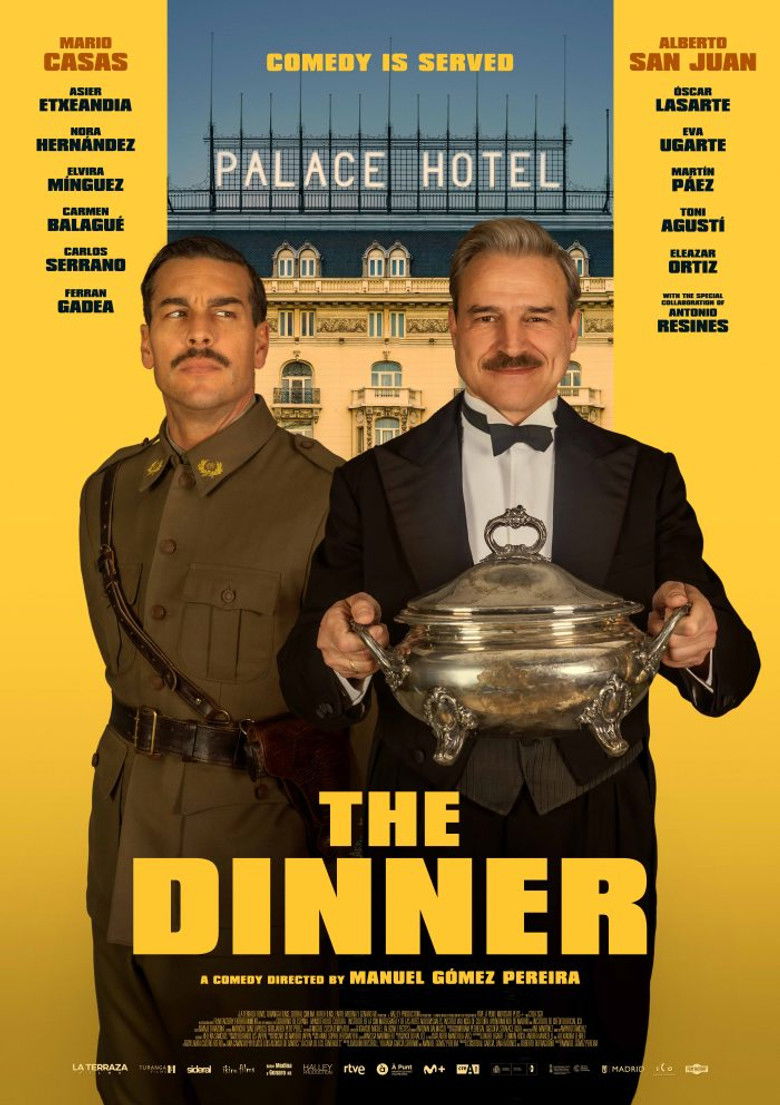
The Dinner
2025
Director
Manuel Gómez Pereira
Runtime
106 minutes
Average Rating
No ratings yetSynopsis
Spain, April 15, 1939. With the Civil War concluded, and with the intention of celebrating his victory, General Franco attends a dinner with his generals at the Palace Hotel.
Where to Watch
Diversity & Representation
Overall Score
Good
Category Breakdown
LGBTQ+ Representation
The film explores the friction between individual identity and the rigid constraints of the post-Civil War era. While explicit queer identities are not the primary focus, the narrative critiques a regime defined by extreme heteronormativity.
Gender Representation
Female characters like María, a pregnant nurse, demonstrate significant agency within a male-dominated military environment. She actively manipulates institutional lists to achieve personal and political goals, challenging the era's expected submissive roles.
Racial & Ethnic Diversity
The cast and demographics reflect the historical homogeneity of Madrid in 1939. The story prioritizes internal class and political divisions over ethnic or racial intersectionality.
Religious & Cultural Diversity
The film deconstructs institutional power by portraying the military and Falange as corrupt and dysfunctional. It uses dark comedy to challenge the perceived stability of the Francoist regime.
Disability Representation
There is no information available regarding the representation of physical or neurodivergent disabilities in this production.
Strengths
- Effective deconstruction of the Francoist regime through dark comedy and logistical chaos.
- Strong portrayal of female agency through characters who subvert institutional hierarchies.
- Sophisticated critique of systemic oppression via individual, granular actions.
Areas for Improvement
- Limited racial and ethnic intersectionality due to the specific historical setting.
- Lack of explicit representation for LGBTQ+ identities or neurodivergent characters.
AI Analysis
The film serves as a piece of historical revisionism that uses humor to dismantle the sanctity of a repressive regime. It focuses on the granular, subversive actions of individuals navigating a corrupt system. By centering the narrative on the logistical failures and moral compromises of the Francoist elite, the film challenges traditional historical narratives. It prioritizes a critique of institutional power over nationalistic triumph. While the setting limits racial diversity due to historical realism, the film excels in its cultural critique of centralized authority and traditionalist morality.
Rate this Movie
Reviews
No reviews yet. Be the first to share your thoughts on this movie!
Use the rating form above to leave a star rating and optional review.