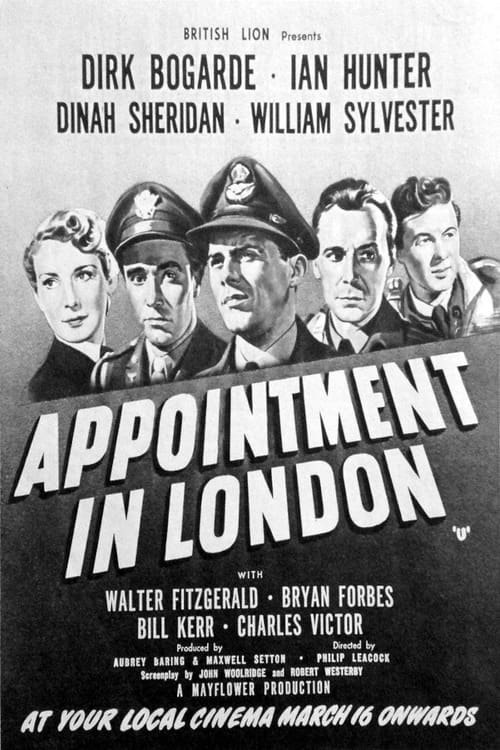
Appointment in London
1953
No user ratings available yet
Representation score: 0.4 out of 10

Representation Score
Minimal
1944
Director
Charles Crichton
Runtime
77 minutes
Average Rating
No ratings yetNew Showbiz Analysis
For Those in Peril is a period piece that emphasizes national cohesion and traditional social structures. It presents a documentary-like narrative focused on honoring wartime functions through a conservative lens. The film does not incorporate diverse perspectives and instead adheres to the social norms of the 1940s.
Category Breakdown
The film follows the conventions of 1940s cinema and does not include any non-cisgender identities or same-sex relationships.
The story emphasizes traditional masculine roles of bravery and strength. Women are shown primarily in domestic or supportive roles.
The cast is predominantly white and British, reflecting the homogeneous demographics of 1944. Non-white or non-Anglo-Saxon characters are not represented.
The film promotes national unity and community resilience. It upholds traditional Western institutions and the importance of military defense.
There is minimal representation of individuals with disabilities. Physical trauma is used as a plot device for rescue operations without offering nuanced character development.
Present on Screen
Limited or Absent
Official Synopsis
A WWII flyer fails to join the RAF so he joins the Air - Sea Rescue instead. His boat is out in all conditions picking up downed pilots and taking them to safety.
1953

1942

1942
1944

1945

1949

1957
1941
No reviews yet. Be the first to share your thoughts on this movie!
Use the rating form above to leave a star rating and optional review.