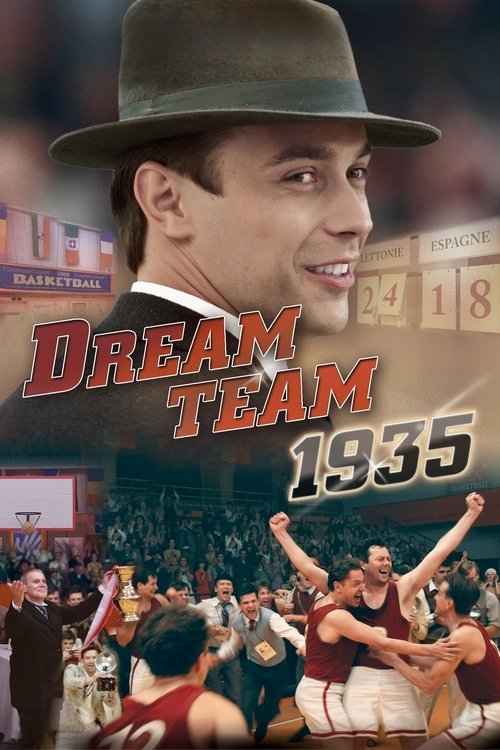
Dream Team 1935
2012
No user ratings available yet
Representation score: 1.1 out of 10

Representation Score
Limited
2015
Director
Darko Bajić
Runtime
125 minutes
Average Rating
No ratings yetNew Showbiz Analysis
We Will Be the World Champions is a traditional historical biopic that prioritizes the legacy of a specific sporting institution. The film operates within the established social and institutional hierarchies of its 1970s setting, focusing on national achievement. The narrative structure is tied to the collectivist frameworks of the socialist era. Rather than challenging modern identity politics, the film seeks to accurately reconstruct the era's group dynamics and regional pride. Ultimately, the film serves as a celebration of the 'Yugoslav Basketball School.' It favors historical accuracy and the celebration of a specific cultural milestone over the exploration of diverse social frameworks.
Category Breakdown
The film does not include any LGBTQ+ characters or narratives. It focuses solely on traditional athletic milestones and historical sporting achievements.
The narrative centers on male-dominated athletic structures typical of the 1970s. Men play a central role in the sporting hierarchy, while women are likely relegated to supporting roles.
The story explores the multi-ethnic landscape of the former Yugoslavia. It emphasizes regional Balkan identities within a unified sporting framework rather than contemporary multi-racial diversity.
Set in a socialist historical context, the film prioritizes collective achievement over Western individualism. It functions as a reconstruction of Yugoslav institutional pride and state-supported systems.
There is no documented evidence of characters with visible or invisible disabilities. No such themes appear to drive the plot or serve as thematic devices.
Present on Screen
Limited or Absent
Official Synopsis
The story about the founders of the famous "Yugoslav Basketball School" and the first gold medal at the Championships in Ljubljana in 1970, is based on real events and is dedicated to personalities who have contributed to the emergence and development of basketball in their country.
2012
2009

2024
2023
1991

2017
2016

2016
No reviews yet. Be the first to share your thoughts on this movie!
Use the rating form above to leave a star rating and optional review.