Find another title
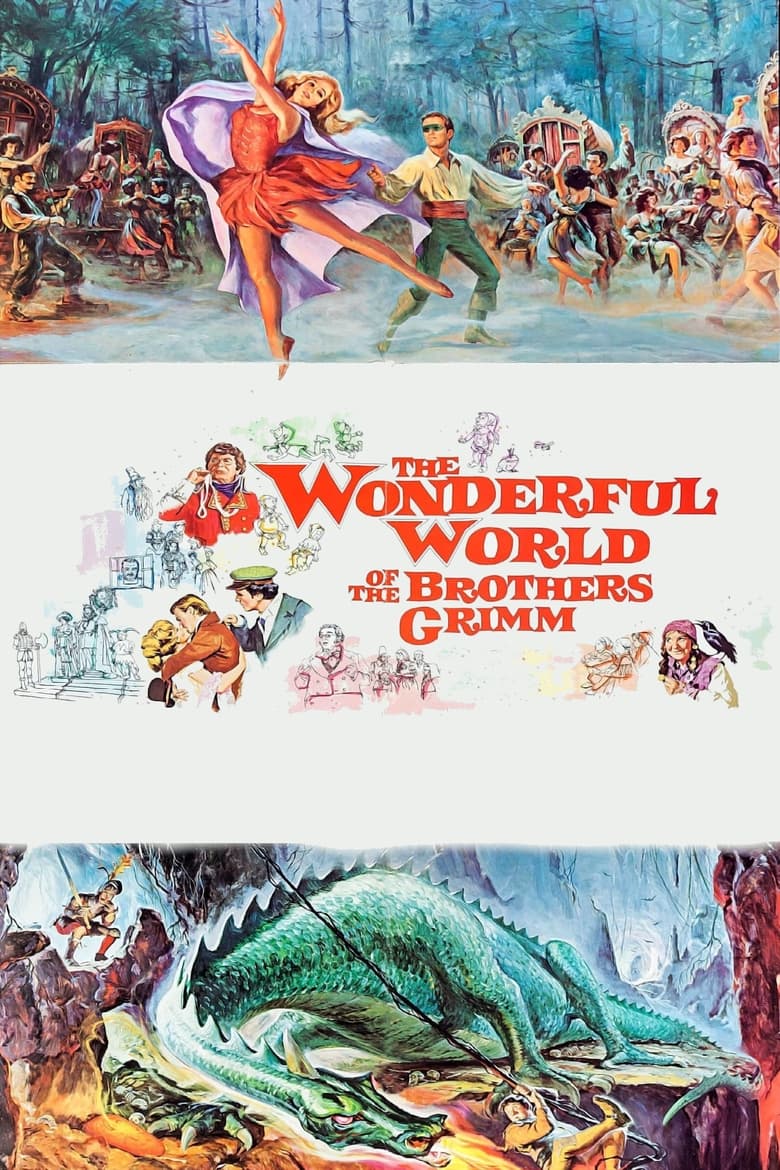
The Wonderful World of the Brothers Grimm
1962
GDirector
George Pal, Henry Levin
Runtime
135 minutes
Average Rating
No ratings yetSynopsis
The Grimm brothers Wilhelm and Jacob, known for their literary works in the nineteenth century, have their lives dramatized. Wilhelm fights to write something entertaining amongst the sea of dry, non-fiction books they write and he sets about collecting oral-tradition fairy tales to put into print. Their life story is countered with reenactments of three of their stories including "The Dancing Princess," "The Cobbler and the Elves" and "The Singing Bone."
Where to Watch
Diversity & Representation
Overall Score
Minimal
Category Breakdown
LGBTQ+ Representation
The film follows a strictly heteronormative framework. Romantic arcs, such as those in 'The Dancing Princess,' focus on traditional courtship between men and women.
Gender Representation
Male characters like the Grimm brothers and various princes drive the plot. Female characters often serve as romanticized objectives or passive figures within the narrative.
Racial & Ethnic Diversity
The cast is predominantly white and Anglo-Saxon in coding. It lacks diverse ethnic backgrounds, presenting a homogeneous social landscape typical of the era's fantasy productions.
Religious & Cultural Diversity
The film celebrates European oral traditions and monarchical structures. It upholds traditional Western moral frameworks without questioning the authority of royalty or the family unit.
Disability Representation
There are no substantive portrayals of physical or neurodivergent disabilities. Fantastical creatures are used, but they lack nuanced depictions of lived experience or agency.
Strengths
- Successfully achieves its goal of cinematic enchantment and musical storytelling.
- Provides a whimsical escapist experience through the lens of classical European folklore.
Areas for Improvement
- Lacks the inclusion of intersectional identities or non-cisnormative characters.
- Reinforces traditional gender hierarchies and homogeneous social landscapes.
- Fails to provide nuanced or agentic representations of disability.
AI Analysis
This film is a quintessential product of the 1960s studio system, prioritizing whimsical escapism and the preservation of classical European folklore. It functions as a reinforcement of the period's conventional social and cultural paradigms rather than a subversion of them. The narrative architecture is built upon traditionalist foundations, reinforcing established social hierarchies regarding gender, race, and class. While it succeeds in cinematic enchantment, it lacks intersectional identities. Ultimately, the work serves to celebrate classical Western heritage through a lens of mid-century studio filmmaking.
Rate this Movie
Reviews
No reviews yet. Be the first to share your thoughts on this movie!
Use the rating form above to leave a star rating and optional review.