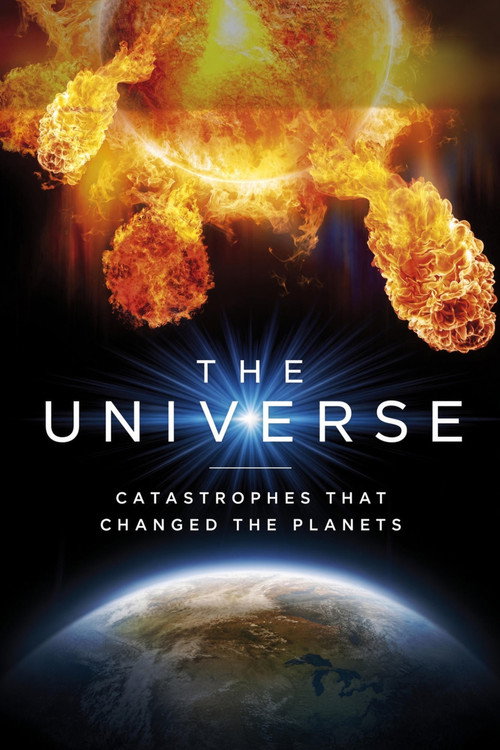
The Universe: Catastrophes that Changed the Planets
2011
No user ratings available yet
Representation score: 0.6 out of 10
Representation Score
Minimal
2011
TV-14Runtime
45 minutes
Average Rating
No ratings yetNew Showbiz Analysis
The film opens on a black void, a single point of light that expands into a swirling nebula, immediately establishing a visual language of abstract, particle-based simulation rather than human drama. This is a secular creation myth, stripping the origin of the solar system of any divine agency and replacing it with the cold, indifferent machinery of gravity and nuclear fusion. The camera lingers on the Sun’s violent birth, treating the protostar as the central protagonist, while Earth is rendered as a minor, unremarkable speck in the frame. The sold meaning is one of cosmic insignificance: the universe is self-organizing, beautiful, and utterly indifferent to human concerns. The narrative structure mirrors a traditional epic, moving from chaos to order, but the "characters" are objects subject to physical laws, not agents with desires. The only human presence is a brief, functional analogy in a glassblowing workshop, where a molten blob flattens into a disc, grounding the abstract physics in a tangible, earthly craft. This moment is the sole bridge between the cosmic and the human, yet it is treated as a mere illustration, not a moral lesson. The film’s argument is that the solar system is a statistical anomaly, a "oddball" in a universe of countless strategies for crafting stars. The ending settles into a wide, static shot of the current solar system, planets orbiting in stable, silent paths. The camera pulls back to reveal the insignificance of Earth against the vastness of space, rewarding the viewer with a sense of cosmic order. The laws of physics are the only "characters" who never pay a price; they destroy stars and form planets without malice or reward. The film’s moral verdict is that human significance is a local phenomenon, a temporary fluctuation in a larger, indifferent system. It is a clean, efficient, and deeply secular portrait of our origins, where the only legend printed is that we are part of a vast, mechanical process, not a special creation.
Category Breakdown
No human characters or identities appear. The narrative tracks celestial mechanics and stellar formation exclusively, leaving no room for interpersonal dynamics or social representation.
Human subjects are absent from the screen. A brief, neutral analogy compares a collapsing gas cloud to a spinning ice skater, but no gendered roles or identities are depicted.
The film features no human cast or ethnic representation. The visual field consists entirely of CGI-rendered stars, planets, and gas clouds, devoid of demographic markers.
The film presents a naturalistic origin story, replacing divine creation with gravitational collapse and supernova shockwaves. It treats physical laws as the sole architects of existence, offering a mythological structure without religious hierarchy.
No human bodies or impairments are shown. The celestial bodies depicted are physical objects subject to mass and momentum, not subjects of medical or social analysis.
Present on Screen
Limited or Absent
Official Synopsis
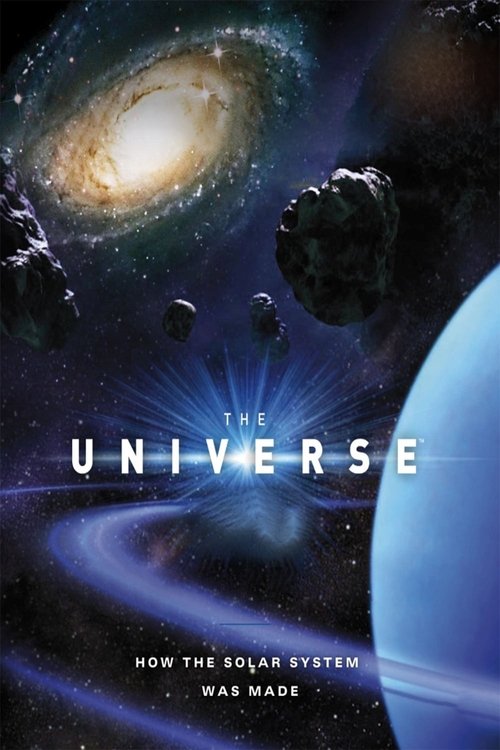
At 4.6 billion years old, the Solar System is our solid, secure home in the Universe. But how did it come to be? In this episode we trace the system's birth from a thin cloud of dust and gas. Shocked by a nearby supernova, the pull of gravity and natural rotation spun it into a flat disc from which the Sun and planets coalesced. It all happened in the space of 700 million years, during which the planets jockeyed for position, dodging the brutal bombardment of deadly asteroids and setting into the neat, stable system that we now realize might be a rarity in the universe.
2011
2017
2011

2007
2010
2015
2018
2007
No reviews yet. Be the first to share your thoughts on this movie!
Use the rating form above to leave a star rating and optional review.